
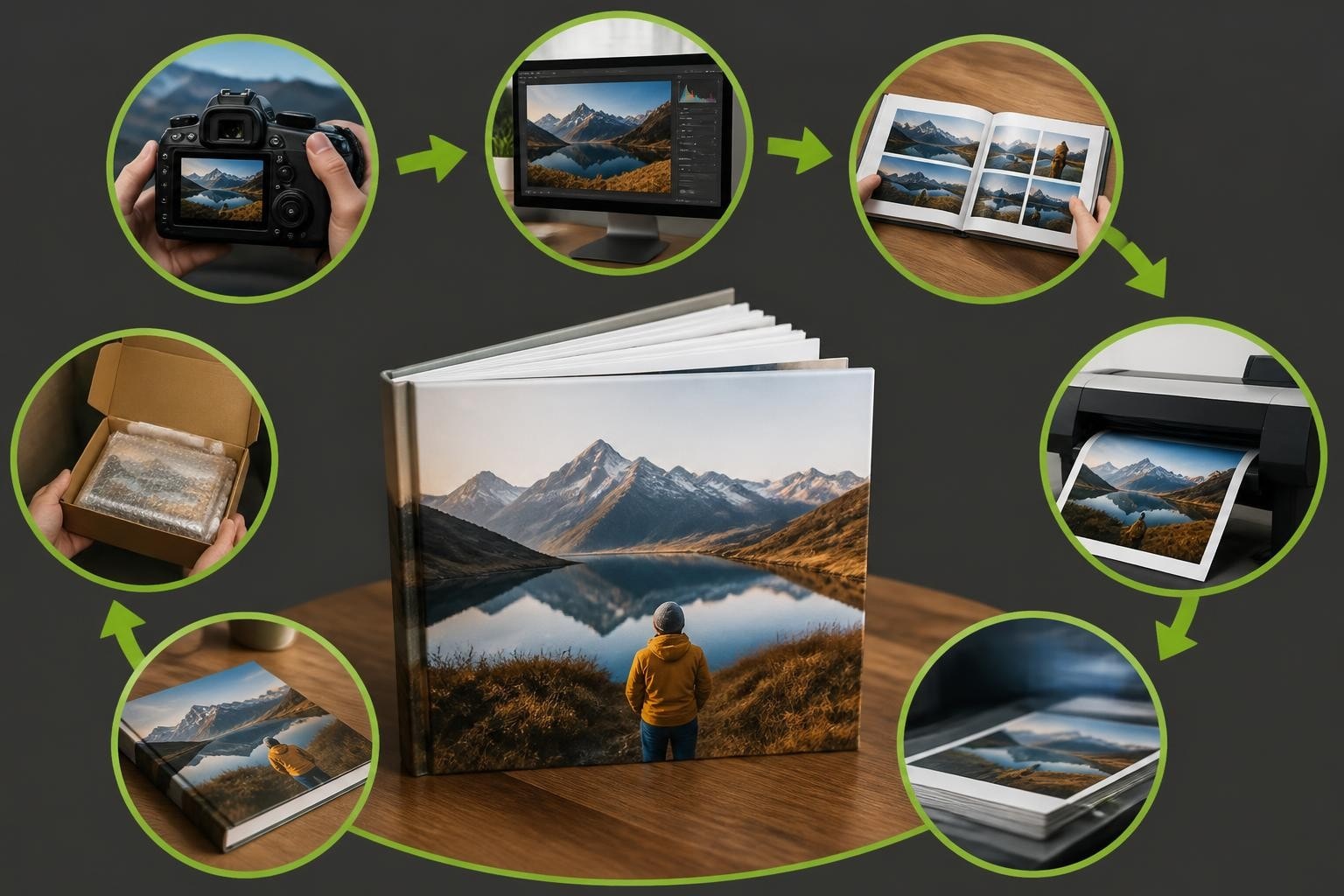
The photobook photo print industry has evolved dramatically over the past decade, transforming from a niche service into a mainstream method for preserving memories and creating personalised gifts. Modern consumers expect high-quality products delivered quickly, whilst businesses require flexible, scalable solutions that maintain consistent standards across thousands of orders. Understanding the technical and creative aspects of photobook photo print production enables businesses to meet these demands whilst building profitable, sustainable operations that resonate with today's quality-conscious customers.
Understanding Photobook Photo Print Technology
Photobook photo print services rely on sophisticated software and hardware working in harmony to transform digital images into physical keepsakes. The process begins with image upload and organisation, followed by layout design, colour correction, and finally, high-resolution printing on professional-grade equipment.
Modern photobook creation requires robust software platforms that handle everything from customer-facing design tools to backend production workflows. The personalised photographs market demands solutions that balance ease of use with creative flexibility, allowing customers to craft unique products whilst maintaining print-ready standards.
Image Quality Requirements
Professional photobook photo print output demands specific technical standards to ensure customer satisfaction. Resolution, colour accuracy, and file format all play critical roles in the final product quality.
Minimum technical specifications include:
- 300 DPI resolution for printed images
- sRGB or Adobe RGB colour space
- JPEG, TIFF, or PNG file formats
- Proper aspect ratio matching for page layouts
- Colour profile embedding for consistency
These specifications ensure that images appear sharp, colours render accurately, and the final product meets professional standards. Businesses must educate customers about these requirements whilst providing tools that automatically optimise uploaded images.

Binding and Finishing Options
The physical construction of a photobook significantly impacts its perceived value and longevity. Different binding methods suit different purposes, from casual family albums to premium wedding books.
| Binding Type | Durability | Cost | Best Use Case |
|---|---|---|---|
| Perfect Binding | Moderate | Low | Budget-friendly albums |
| Saddle Stitch | Low | Very Low | Thin booklets, catalogues |
| Hardcover Casebound | High | High | Premium wedding albums |
| Lay-flat Binding | Very High | Very High | Professional portfolios |
| Spiral Binding | Moderate | Low | Cookbooks, practical guides |
Selecting appropriate binding methods depends on the target market, price positioning, and intended use. Premium photobook photo print services often offer multiple options, allowing customers to choose based on budget and preferences.
Software Solutions for Photobook Creation
The backbone of any successful photobook photo print operation is reliable, user-friendly software that streamlines both customer experience and production workflows. Modern platforms must accommodate various skill levels whilst maintaining professional output standards.
Taopix provides comprehensive software solutions designed specifically for businesses offering photobook and personalised print services. Their technology enables flexible workflows that adapt to different business models, from retail operations to online-only services.
Customer-Facing Design Tools
Intuitive design interfaces determine whether customers complete their photobook projects or abandon them mid-creation. The best tools balance simplicity with creative control, offering templates for beginners whilst allowing advanced users complete customisation freedom.
Essential features for customer design tools:
- Drag-and-drop image placement
- Automatic layout suggestions
- Real-time preview capabilities
- Text editing with multiple font options
- Background and theme customisation
- Mobile and desktop compatibility
These features ensure customers enjoy the creative process whilst the software maintains print-ready standards behind the scenes. The online designer approach allows businesses to offer browser-based creation tools that require no software installation, reducing friction in the customer journey.
Production Workflow Management
Behind every customer-facing interface sits complex workflow management software that routes orders, prepares files for printing, and manages quality control. Efficient production workflows determine profitability and delivery speed.
Production management systems handle order intake, file processing, print queue management, and shipping coordination. They automatically flag potential quality issues, such as low-resolution images or incorrect colour profiles, before production begins. This preventative approach reduces waste and ensures consistent output quality across all photobook photo print orders.
The desktop designer option provides additional flexibility for businesses working with professional photographers or corporate clients who require advanced features and offline capabilities.
Market Trends and Customer Expectations
Consumer preferences in the photobook photo print market continue evolving, influenced by technological advances, social media culture, and changing attitudes towards physical versus digital media. Understanding these trends helps businesses position their offerings effectively.

The Premium Quality Movement
Today's customers increasingly value quality over quantity, willing to pay premium prices for superior materials and craftsmanship. This shift creates opportunities for businesses to differentiate through excellence rather than competing solely on price.
Premium photobook photo print products feature:
- Archival-quality paper (200+ gsm)
- Professional colour calibration
- Hand-finished bindings
- Protective outer cases
- Extended guarantees
Businesses adopting premium positioning must ensure every aspect of their offering reflects quality, from software interface to packaging. The investment in superior materials and processes typically yields higher margins and more loyal customers.
Speed and Convenience Requirements
Modern consumers expect rapid turnaround times without sacrificing quality. Same-day or next-day production has become increasingly common, particularly for smaller format photobooks and rush orders.
Meeting these expectations requires:
- Automated file processing systems
- Efficient print queue management
- Strategic inventory positioning
- Reliable courier partnerships
- Real-time order tracking
Businesses must balance speed with quality control, ensuring accelerated production doesn't compromise output standards. Automated quality checks and streamlined workflows enable faster delivery whilst maintaining consistent results.
Business Models and Revenue Streams
Successful photobook photo print businesses employ various models, from pure-play online operations to integrated retail offerings. Each approach presents unique advantages and challenges requiring different operational strategies.
Online-Only Operations
Digital-native businesses eliminate physical retail overheads whilst accessing global markets. They rely entirely on web traffic, search visibility, and digital marketing to attract customers. This model demands exceptional user experience and seamless online processes.
Advantages of online-only models:
- Lower overhead costs
- Unlimited geographic reach
- Easy scaling opportunities
- Data-driven optimisation
- 24/7 customer access
These businesses must invest heavily in website optimisation, customer support infrastructure, and digital marketing. The case study showing 15 years with Taopix demonstrates how sustained partnerships with technology providers enable long-term success in this competitive environment.
Retail Integration Strategies
Physical retail locations offer hands-on assistance and immediate gratification, appealing to customers who prefer tangible interaction before purchasing. Successful retail integration combines in-store service with online convenience.
| Aspect | Online-Only | Retail-Integrated | Hybrid Model |
|---|---|---|---|
| Customer Reach | Global | Local/Regional | Both |
| Overhead Costs | Low | High | Moderate |
| Customer Trust | Building Required | Immediate | Strong |
| Scaling Complexity | Simple | Complex | Moderate |
| Margin Potential | Moderate | High | High |
Retail locations can offer consultation services, sample viewing, and immediate problem resolution that online-only competitors cannot match. The photobook photo print experience becomes more tangible when customers can touch materials and see finished samples before ordering.
Quality Control and Customer Satisfaction
Maintaining consistent quality across thousands of photobook photo print orders requires systematic quality control processes and continuous improvement initiatives. Every defect represents lost revenue, damaged reputation, and increased costs.
Automated Quality Assurance
Modern production workflows incorporate automated checks that identify potential issues before printing begins. These systems scan for resolution problems, colour space mismatches, missing fonts, and layout errors.
Automated quality control examines:
- Image resolution against print size
- Colour profile compatibility
- Text readability and placement
- Bleed and margin compliance
- File corruption or damage
These checks occur instantaneously as files enter the production queue, flagging problematic orders for human review. This approach prevents most quality issues whilst allowing manual intervention when necessary.

Manual Inspection Points
Despite automation advances, human inspection remains essential for catching subjective quality issues that algorithms might miss. Strategic manual checkpoints ensure products meet both technical and aesthetic standards.
Inspection points typically include:
- Post-print colour verification
- Binding quality assessment
- Page alignment checking
- Cover finish examination
- Packaging quality control
Staff training and clear quality standards ensure consistent evaluation across all inspectors. Regular calibration sessions help maintain uniform standards as team members change and production volumes fluctuate.
Sustainable Production Practices
Environmental consciousness increasingly influences purchasing decisions, with customers favouring businesses demonstrating genuine commitment to sustainability. Photobook photo print operations can implement numerous eco-friendly practices without sacrificing quality or profitability.
Paper and Material Sourcing
Responsible sourcing begins with selecting papers certified by recognised environmental standards. FSC (Forest Stewardship Council) and PEFC (Programme for the Endorsement of Forest Certification) certifications indicate sustainable forestry practices.
Beyond certification, businesses should consider:
- Recycled content percentages
- Manufacturing process efficiency
- Transportation distances
- Packaging recyclability
- End-of-life biodegradability
Transparent communication about material sourcing builds customer trust and differentiates environmentally conscious businesses from competitors. Many customers willingly pay premium prices for genuinely sustainable photobook photo print products.
Waste Reduction Strategies
Print production inherently generates waste through test prints, setup materials, and rejected products. Strategic waste reduction improves both environmental impact and profitability.
Effective waste reduction approaches include:
- Digital proofing systems reducing test prints
- Precise ink management minimising overuse
- Scrap paper recycling programmes
- Energy-efficient equipment selection
- Optimised print layout maximising material use
These practices demonstrate corporate responsibility whilst reducing operational costs. The dual benefit makes sustainability initiatives attractive from both ethical and financial perspectives.
Emerging Technologies and Future Directions
The photobook photo print industry continues evolving with technological advances opening new possibilities for personalisation, production efficiency, and customer engagement. Forward-thinking businesses must monitor these trends whilst maintaining operational stability.
Artificial Intelligence Integration
AI-powered tools increasingly assist with image selection, layout optimisation, and quality enhancement. These systems analyse uploaded photos, suggest optimal arrangements, and automatically correct common defects.
Machine learning algorithms can:
- Identify the best images from large collections
- Suggest complementary colour schemes
- Automatically remove red-eye and blemishes
- Recommend appropriate layouts based on image content
- Predict customer preferences based on past behaviour
These capabilities enhance customer experience whilst reducing the time required to create photobook photo print products. However, businesses must balance automation with creative control, ensuring AI suggestions enhance rather than restrict customer expression.
Augmented Reality Preview
AR technology allows customers to visualise finished photobooks in their physical environment before ordering. Using smartphone cameras, customers can see virtual representations at actual size, helping them select appropriate formats and sizes.
This technology reduces returns and increases customer satisfaction by setting accurate expectations. The immersive preview experience also enhances perceived value, justifying premium pricing for photobook photo print products.
Pricing Strategies and Value Positioning
Effective pricing balances profitability with market competitiveness whilst clearly communicating value to customers. The photobook photo print market accommodates multiple pricing tiers, from budget offerings to luxury products commanding premium prices.
Cost-Based Pricing Foundations
Understanding true costs enables informed pricing decisions that ensure sustainable profitability. Comprehensive cost analysis must include both obvious and hidden expenses.
| Cost Category | Typical Percentage | Key Components |
|---|---|---|
| Materials | 25-35% | Paper, ink, covers, binding materials |
| Labour | 15-25% | Design support, production, quality control |
| Software | 5-10% | Licensing, maintenance, updates |
| Marketing | 15-20% | Advertising, SEO, content creation |
| Overhead | 10-15% | Facilities, utilities, administration |
| Profit Margin | 20-30% | Return on investment, growth funding |
These percentages vary based on business model, production volume, and market positioning. Regular cost analysis ensures pricing remains competitive whilst protecting profitability as expenses fluctuate.
Value-Based Pricing Opportunities
Premium pricing succeeds when customers perceive exceptional value justifying higher costs. Value derives from quality, convenience, service, and emotional connection rather than purely functional attributes.
Premium photobook photo print services differentiate through:
- Superior material quality and craftsmanship
- Exceptional customer service and support
- Faster production and delivery
- Extended guarantees and warranties
- Exclusive design options and customisation
Communicating these differentiators effectively requires clear messaging, visual demonstrations, and customer testimonials. The premium segment typically generates higher margins whilst attracting more loyal, less price-sensitive customers.
Marketing and Customer Acquisition
Attracting customers to photobook photo print services requires integrated marketing strategies combining digital channels, content marketing, and strategic partnerships. Successful businesses employ multichannel approaches that reinforce brand messaging across touchpoints.
Content Marketing Approaches
Educational content establishes expertise whilst attracting organic search traffic. Useful resources help potential customers understand photobook creation whilst subtly promoting your services.
Effective content topics include:
- Photo selection and curation guides
- Design principles for compelling layouts
- Preservation tips for family memories
- Occasion-specific photobook ideas
- Technical tutorials and troubleshooting
This approach builds trust and authority whilst generating sustainable organic traffic. According to research on photobook trends, photobooks represent carefully considered artistic works, suggesting customers appreciate thoughtful guidance during creation.
Partnership and Collaboration Opportunities
Strategic partnerships expand market reach whilst adding credibility. Photographers, event planners, schools, and corporate clients represent valuable partnership opportunities for photobook photo print businesses.
Partnership programmes might include:
- Professional photographer referral networks
- Wedding planner preferred vendor arrangements
- School yearbook production contracts
- Corporate gift programme relationships
- Non-profit fundraising collaborations
These relationships provide steady revenue streams whilst reducing customer acquisition costs. The Taiwan print industry introduction demonstrates how strategic technology partnerships enable market expansion and service enhancement.
Technical Infrastructure Requirements
Robust technical infrastructure supports reliable photobook photo print operations capable of handling peak demand periods without service degradation. Infrastructure planning must accommodate current needs whilst allowing future scaling.
Server and Storage Considerations
Image-heavy photobook projects require substantial storage capacity and processing power. Cloud infrastructure offers scalability advantages whilst requiring careful cost management.
Infrastructure requirements include:
- High-capacity storage for customer files
- Redundant backup systems
- Scalable processing power for file preparation
- Content delivery networks for fast uploads
- Security measures protecting customer data
Balancing performance, reliability, and cost requires ongoing optimisation. Many businesses adopt hybrid approaches, maintaining local processing capabilities whilst leveraging cloud resources for peak demand periods.
Integration and Compatibility
Modern photobook photo print businesses rarely operate in isolation. Integration with payment processors, shipping providers, accounting systems, and marketing platforms creates seamless operations.
Critical integrations connect:
- E-commerce platforms for order management
- Payment gateways for secure transactions
- Shipping carriers for automated fulfilment
- Email marketing tools for customer communication
- Analytics platforms for performance tracking
Well-integrated systems reduce manual data entry, minimise errors, and provide comprehensive operational visibility. The investment in proper integration pays dividends through improved efficiency and reduced operational friction.
The photobook photo print industry offers substantial opportunities for businesses combining quality production, user-friendly software, and effective marketing strategies. Success requires balancing customer expectations for ease-of-use with technical requirements for print-ready output, whilst maintaining operational efficiency that supports profitable pricing. Whether you're launching a new photobook service or enhancing existing capabilities, Taopix provides the software solutions and expertise to build successful photobook operations with flexible workflows and fully customisable user experiences that meet diverse market needs.