
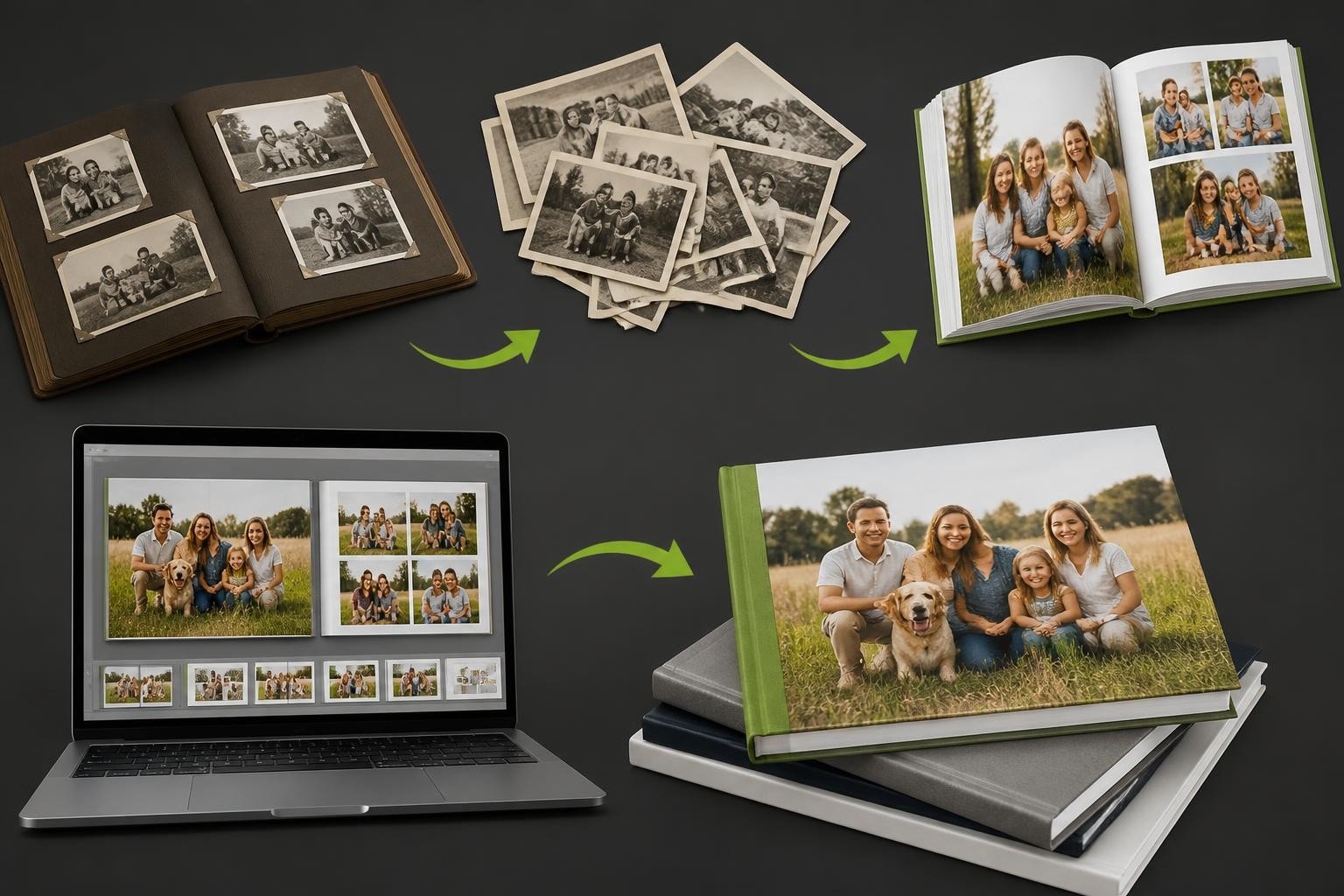
In an era where billions of digital photographs remain trapped on smartphones and cloud storage, printed photo albums have emerged as powerful tools for preserving memories in tangible form. For businesses operating in the personalised print industry, understanding the resurgence of physical photo albums presents significant commercial opportunities. The market has evolved considerably, driven by consumer demand for premium products that combine traditional craftsmanship with modern design capabilities. This comprehensive guide explores the landscape of printed photo albums, examining customer preferences, production considerations, and the technology that makes these cherished products possible.
The Revival of Physical Photo Preservation
The digital age paradox has created an unexpected consequence: whilst we capture more photographs than ever before, we rarely engage with them meaningfully. Research indicates that the average person takes hundreds of photos monthly but views fewer than a dozen repeatedly. This disconnect has fuelled renewed interest in printed photo albums as a solution to digital overwhelm.
Why Customers Choose Printed Albums
Several compelling factors drive consumer preference for physical photo albums over purely digital alternatives:
- Tangible emotional connection that digital scrolling cannot replicate
- Protection from technological obsolescence and platform changes
- Generational legacy that can be passed down through families
- Intentional curation that encourages thoughtful selection of meaningful images
- Social sharing without screens during family gatherings
- Artistic expression through physical layout and design choices
According to research on why printed memories are making a comeback among younger generations, millennials and Gen Z consumers particularly value the authenticity and permanence that physical albums provide.

Market Segments and Applications
Printed photo albums serve diverse purposes across multiple customer segments. Understanding these distinct markets helps businesses tailor their offerings effectively.
| Customer Segment | Primary Use Case | Key Features Valued | Average Project Size |
|---|---|---|---|
| Wedding Couples | Ceremony documentation | Premium materials, large format | 60-120 pages |
| New Parents | Baby's first year | Durable binding, easy layout | 40-80 pages |
| Travel Enthusiasts | Holiday memories | Landscape orientation, map elements | 30-60 pages |
| Professional Photographers | Client deliverables | High-quality printing, customisation | 20-100 pages |
| Family Historians | Multi-generational archives | Archival quality, large capacity | 100-200 pages |
The resurgence of printed wedding albums demonstrates particularly strong growth, with couples investing in premium products that become family heirlooms.
Design Formats and Product Options
Modern printed photo albums encompass a broad spectrum of formats, each suited to different customer preferences and price points. Businesses must balance variety with operational efficiency when determining their product range.
Binding Styles and Their Applications
The binding method fundamentally affects both the aesthetic appeal and durability of printed photo albums. Each style presents distinct advantages:
Layflat Binding creates seamless spreads where photographs can extend across both pages without interruption in the centre gutter. This premium option appeals to wedding photographers and design-conscious customers willing to invest in superior presentation. The technical complexity requires specialised equipment but commands higher margins.
Perfect Binding offers a classic book appearance with individual pages glued into a spine. This economical option suits larger page counts and provides excellent value for family albums and travel photobooks. The familiar book format reassures traditional customers whilst maintaining professional quality.
Spiral and Wire Binding allows albums to lie completely flat when opened, facilitating easy viewing and page-turning. Although perceived as less formal, this practical option serves specific niches including recipe books, baby journals, and reference albums.
Paper Quality and Finish Considerations
The substrate choice significantly influences the final product's appearance and longevity. Professional printed photo albums typically employ specialist papers designed for photographic reproduction:
- Lustre finish provides subtle sheen that enhances colour vibrancy whilst minimising fingerprints
- Matte finish delivers sophisticated, gallery-quality appearance with no reflective glare
- Glossy finish maximises colour saturation and contrast for vibrant images
- Fine art paper creates museum-quality presentation with textured surfaces
Paper weight also matters. Premium albums generally use 200gsm or heavier stock to ensure durability and prevent show-through between pages.
The Production Workflow Behind Quality Albums
Creating printed photo albums involves sophisticated workflows that blend customer creativity with production efficiency. Businesses must optimise each stage from initial design through final delivery.
Software Solutions for Customer Creation
Modern photobook creation depends on intuitive software that empowers customers whilst maintaining production standards. The Taopix online designer platform exemplifies how technology can streamline the creative process through drag-and-drop functionality, automatic layout suggestions, and real-time previewing.
Effective design software must balance creative freedom with technical constraints:
- Template libraries that accelerate design whilst ensuring proper margins and bleed
- Image quality checking that alerts customers to low-resolution uploads
- Auto-fill features that intelligently populate pages based on user preferences
- Mobile compatibility enabling design work across devices
- Cloud synchronisation allowing projects to be saved and resumed anywhere
These capabilities reduce customer frustration whilst minimising production issues caused by design errors.

Quality Control and Production Standards
Professional printed photo albums require rigorous quality management throughout production. Successful businesses implement systematic checks at critical junctures:
Pre-production verification examines uploaded images for resolution, colour space, and file integrity. Automated systems can flag potential issues before printing begins, reducing waste and customer disappointment. Advanced colour management ensures consistency across different devices and viewing conditions.
Print calibration maintains colour accuracy across production runs. Regular calibration of printing equipment against standard references prevents drift and ensures that finished albums match customer expectations established during the design phase.
Binding inspection confirms that pages are correctly ordered, securely attached, and properly aligned. Even minor binding defects compromise the premium perception that customers expect from printed photo albums.
Customer Experience and Personalisation
The personalisation trend extends beyond merely inserting photographs into templates. Today's customers expect creative control that reflects their unique stories whilst benefiting from professional guidance.
Customisation Options That Drive Value
Successful photobook businesses differentiate themselves through thoughtful customisation features:
| Customisation Element | Customer Benefit | Implementation Complexity | Margin Impact |
|---|---|---|---|
| Cover materials | Premium perception | Medium | High |
| Title embossing | Personalised elegance | Low | Medium |
| Custom page layouts | Creative expression | High | Low |
| Text integration | Story enhancement | Low | Low |
| Multiple photo formats | Design flexibility | Medium | Low |
| Special occasion themes | Time savings | Medium | Medium |
Advanced personalisation requires robust software infrastructure. As demonstrated through 15 years of partnership success, sustainable platforms must evolve alongside changing customer expectations whilst maintaining reliability.
Guiding Customers Through Design Decisions
Many customers feel overwhelmed when facing blank pages and hundreds of potential photographs. Effective businesses provide structured support:
Smart templates organised by occasion, style, and photo count help customers start quickly. Rather than confronting unlimited possibilities, users select templates aligned with their project, then customise from that foundation.
Suggested layouts based on photograph characteristics streamline page design. When software can analyse image content, orientation, and quality to recommend appropriate layouts, customers achieve professional results with minimal effort.
Preview functionality showing realistic renderings of finished printed photo albums helps customers visualise the final product before committing to purchase. High-fidelity previews reduce returns and increase satisfaction.
Emerging Trends Shaping the Industry
The printed photo album sector continues evolving as consumer preferences shift and technology advances. Forward-thinking businesses monitor these trends to stay competitive.
Sustainable and Ethical Production
Environmental consciousness increasingly influences purchasing decisions, particularly amongst younger demographics. Customers now enquire about paper sourcing, production methods, and shipping practices.
Sustainable practices include:
- FSC-certified papers from responsibly managed forests
- Vegetable-based inks that reduce environmental impact
- Carbon-neutral shipping options
- Recycled or recyclable packaging materials
- Local production to minimise transportation emissions
Businesses that transparently communicate their sustainability commitments differentiate themselves whilst aligning with customer values.
Integration of Augmented Reality
Innovative producers are exploring augmented reality (AR) features that bridge digital and physical experiences. Printed photo albums enhanced with AR markers can trigger video playback, audio narration, or additional photographs when viewed through smartphone applications.
This technology particularly appeals to customers seeking to preserve dynamic memories-wedding vows, children's voices, or travel experiences-alongside static images. The hybrid approach respects the tangible appeal of printed albums whilst acknowledging that some moments deserve motion and sound.

Collaborative Album Creation
Multi-contributor projects allow families or friend groups to collectively build printed photo albums. This trend manifests particularly in milestone celebrations, memorial albums, and multi-generational family histories.
Technology enabling collaboration must address:
- Permission management for contributors with varying access levels
- Version control to prevent conflicting edits
- Commenting systems for feedback and approval workflows
- Notification systems keeping all participants informed
- Final approval processes before production commences
These features transform album creation from solitary activity into shared experience, enriching both the process and the final product.
Business Considerations for Print Providers
Companies offering printed photo albums face unique operational challenges that require strategic planning and appropriate technology investment.
Pricing Strategy and Product Positioning
Successful pricing balances profitability with market competitiveness whilst communicating value. The printed photo album market spans extreme price ranges, from budget offerings under £20 to luxury products exceeding £200.
Value-based pricing aligns cost with perceived quality and emotional significance. Wedding albums command premium prices because couples associate them with once-in-a-lifetime events. Conversely, everyday family albums succeed at moderate price points that encourage frequent purchases.
Tiered product ranges allow businesses to serve multiple market segments without diluting brand positioning. A clearly differentiated lineup-good, better, best-helps customers self-select whilst providing upsell pathways.
Technology Infrastructure Requirements
Delivering printed photo albums at scale demands robust technical infrastructure. The Taopix platform demonstrates how comprehensive software solutions address multiple production requirements simultaneously.
Critical system components include:
- Design interface accessible across desktop and mobile devices
- File management handling high-resolution images efficiently
- Order processing automating workflow from submission through shipping
- Production integration connecting design files to printing equipment
- Customer service tools enabling support staff to view and modify orders
Investment in appropriate technology reduces operational friction, improves consistency, and scales efficiently as order volumes grow.
Managing Seasonal Demand Fluctuations
Printed photo album sales exhibit pronounced seasonality, with peak demand surrounding holidays, wedding season, and back-to-school periods. Businesses must prepare for these variations:
Capacity planning ensures adequate production capability during peak periods without excessive idle capacity during slower months. Flexible staffing arrangements, equipment sharing, or outsourcing partnerships can balance these demands.
Marketing timing that promotes printed photo albums ahead of peak demand smooths order flow and reduces last-minute rushes. Campaigns encouraging early Christmas shopping or pre-wedding planning distribute orders more evenly.
Expedited options with premium pricing capitalise on procrastinators whilst generating higher margins. Clearly communicated cut-off dates for standard delivery versus expedited service manage customer expectations.
Customer Education and Support
Many potential customers remain unaware of modern photobook capabilities or feel intimidated by the creation process. Educational content reduces barriers whilst positioning businesses as helpful experts.
Content Marketing for Album Creation
Informative content attracts customers whilst demonstrating expertise:
- Design inspiration galleries showcasing diverse styles and occasions
- Step-by-step tutorials walking users through their first project
- Theme-specific guides addressing wedding albums, baby books, or travel journals
- Technical tips explaining image resolution, cropping, and colour considerations
- Preservation advice helping customers maintain their finished albums
This content serves dual purposes: attracting potential customers through search engines whilst reducing support burden by proactively answering common questions.
Customer Support Throughout Creation
Even with intuitive software, customers occasionally need assistance. Support strategies might include:
- Live chat providing immediate help during design sessions
- Email support for detailed questions requiring research or examples
- Video tutorials demonstrating specific techniques or features
- FAQ databases allowing self-service for common issues
- Community forums where customers share inspiration and solutions
Responsive, knowledgeable support transforms uncertain browsers into confident customers who complete purchases and recommend the service to others.
The Future Landscape of Printed Photo Albums
Looking ahead, printed photo albums will likely evolve rather than disappear, adapting to changing consumer behaviours whilst maintaining their core appeal as tangible memory preservation.
Artificial Intelligence in Design Assistance
AI-powered features increasingly simplify album creation. Advanced algorithms can analyse photograph collections to identify best images, suggest thematic groupings, recommend layouts, and even generate caption text. These capabilities particularly benefit time-poor customers who value professional results without extensive manual effort.
However, successful implementation requires balance. Customers appreciate intelligent assistance but resist feeling that software has removed their creative agency. The ideal approach offers AI suggestions that customers can accept, modify, or reject, maintaining their sense of ownership.
Print-on-Demand Evolution
Technological advances enable economically viable single-copy production with quality approaching traditional offset printing. This development allows businesses to offer printed photo albums without inventory risk, expanding product ranges and enabling ultra-personalisation without minimum order quantities.
Print-on-demand particularly suits niche occasions-anniversary albums, memorial books, or hobby documentation-where individual customers seek unique products but aggregate demand remains modest.
Direct Integration with Photo Sources
Streamlined workflows connecting directly to photograph sources reduce friction in album creation. Integrations with popular storage platforms, social media services, and smartphone applications allow customers to pull images directly into design software without manual downloading and uploading.
This seamless experience particularly appeals to mobile-first users who maintain photo libraries exclusively on devices rather than computers. Businesses offering these integrations remove barriers that might otherwise prevent project completion.
Printed photo albums represent far more than simple photograph containers-they embody intentional memory preservation, creative expression, and tangible connections in an increasingly digital world. For businesses in the personalised print industry, understanding customer motivations, production requirements, and emerging trends positions them to capitalise on sustained demand for these meaningful products. Taopix provides the comprehensive software solutions that enable businesses to deliver exceptional photobook experiences, combining intuitive design tools with flexible production workflows that scale alongside your ambitions.