
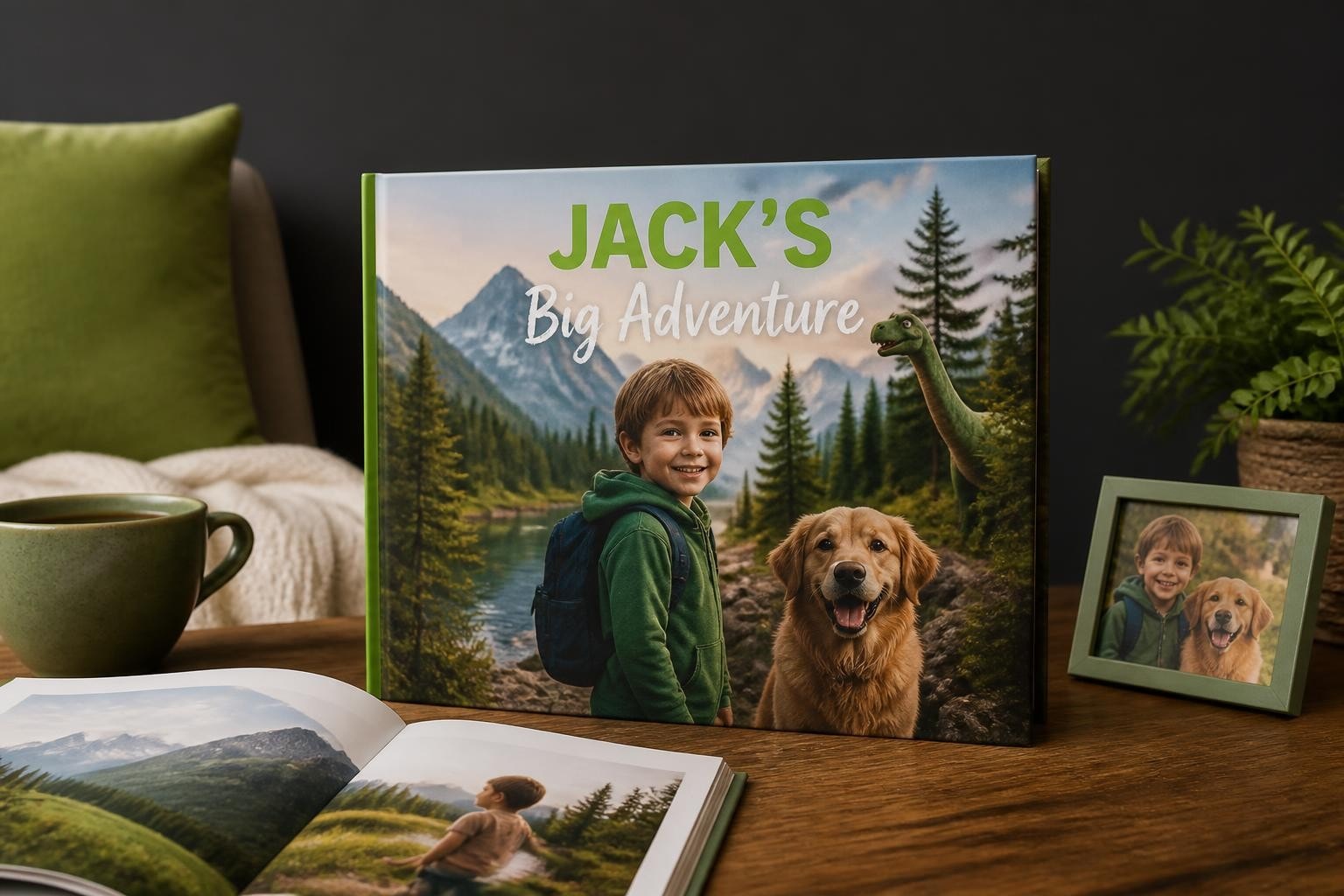
A personalised picture book represents far more than simply adding a child's name to a generic story. These custom publications integrate photographs, personal details, and tailored narratives to create deeply meaningful reading experiences that resonate with individual readers. For businesses offering print personalisation services, understanding the technical requirements, design considerations, and market opportunities surrounding these products has become essential in an increasingly competitive landscape.
The Growing Market for Personalised Children's Books
The demand for personalised printed products continues to expand across global markets, with picture books representing a particularly compelling segment. Parents, grandparents, and gift-givers increasingly seek unique alternatives to mass-produced children's literature, driving substantial growth in this category.
Research from Scientific American highlights the educational power of personalised children’s books, demonstrating how customisation enhances engagement and comprehension. Children who see themselves represented in stories show increased attention spans and greater emotional connection to reading material.
Key Market Drivers
Several factors contribute to sustained demand for personalised picture books:
- Emotional connection: Families value products that reflect their unique experiences and relationships
- Gift-giving occasions: Birthdays, holidays, and milestone events create consistent purchasing opportunities
- Educational benefits: Personalisation supports literacy development and self-identity formation
- Social media influence: Shareable, photogenic products gain visibility through digital channels
- Technological accessibility: Modern software solutions make production economically viable
The combination of emotional appeal and educational value positions personalised picture books as premium products that command higher margins than standard offerings.
Technical Requirements for Production
Producing high-quality personalised picture books requires robust software infrastructure capable of handling variable data, image processing, and flexible design workflows. Businesses must balance creative possibilities with technical constraints to deliver consistent results.

Essential Software Capabilities
| Feature | Business Benefit | Technical Consideration |
|---|---|---|
| Photo integration | Enables customer uploads | Image quality validation required |
| Text personalisation | Names, dedications, custom messages | Character limits and font scaling |
| Template flexibility | Multiple design options | Version control and updates |
| Preview generation | Reduces production errors | Real-time rendering performance |
| Print-ready output | Streamlines fulfilment | Colour management and resolution |
Implementing Taopix’s online designer provides businesses with the foundational technology needed to offer sophisticated personalisation whilst maintaining production efficiency. The software handles complex variable data processing whilst presenting customers with intuitive creation interfaces.
Image Quality Standards
Maintaining consistent quality across personalised products presents ongoing challenges, particularly when customers supply their own photographs. Establishing clear guidelines helps manage expectations:
- Minimum resolution requirements: Specify DPI standards for different page sizes
- Aspect ratio guidance: Provide templates that accommodate common photo dimensions
- Colour space management: Ensure RGB-to-CMYK conversion preserves image integrity
- Automated quality checks: Flag low-resolution or improperly formatted files
- Customer education: Offer tips for capturing or selecting appropriate images
The relationship between personalised photographs and print quality cannot be understated, as customer-supplied images directly impact final product satisfaction.
Design Strategies for Effective Personalised Picture Books
Creating compelling personalised picture book templates requires balancing aesthetic appeal with practical production considerations. Successful designs accommodate variable content whilst maintaining visual coherence across different customisation scenarios.
Layout Flexibility
Picture book designs must function effectively with varying amounts of text, different photo orientations, and diverse subject matter. Consider these approaches:
Modular design systems allow elements to scale or reposition based on content volume. A dedication page might display a single image with three lines of text or multiple smaller photos with minimal text, using the same underlying template structure.
Safe zones and bleed areas become particularly important when customers position their own images. Designs should guide photo placement whilst preventing critical content from falling into trim areas.
Typography hierarchy needs sufficient flexibility to accommodate names of varying lengths whilst maintaining legibility. A child named "Jo" requires different spacing than "Christopher Alexander," yet both should appear balanced within the design.
Storytelling Formats
Different narrative structures suit various personalisation approaches:
- Adventure stories: Position the child as protagonist exploring fantastical settings
- Educational content: Incorporate the child's environment, family members, or interests
- Milestone celebrations: Document growth, achievements, or special occasions
- Family histories: Weave multiple generations into cohesive narratives
- Custom adventures: Allow parents to define plot elements and character traits

Recent studies on digital personalised picture books and social development demonstrate how narrative choice impacts child engagement and behavioural outcomes, informing effective template design.
Production Workflows and Fulfilment Considerations
Efficient production processes distinguish profitable personalised picture book operations from struggling ventures. Every step from order capture through shipping influences both unit economics and customer satisfaction.
Order Processing Systems
Automated workflows reduce errors and labour costs whilst improving turnaround times. Essential components include:
- Customer data validation upon order submission
- Automated proof generation for customer approval
- Integration with print production management systems
- Quality control checkpoints before binding
- Shipment tracking and customer communication
Businesses with established workflows, such as those documented in long-term case studies, demonstrate measurably better efficiency metrics than operations lacking systematic processes.
Print Production Options
| Production Method | Volume Suitability | Unit Cost | Turnaround | Quality |
|---|---|---|---|---|
| Digital short-run | 1-100 books | Higher | 2-5 days | Excellent |
| Offset printing | 500+ books | Lower | 10-15 days | Superior |
| Print-on-demand | Variable | Medium | 3-7 days | Very good |
| Hybrid approach | All volumes | Optimised | Flexible | Consistent |
Selecting appropriate production methods based on order volumes and timeline requirements optimises profitability. Many successful operations maintain multiple production partnerships to accommodate different scenarios.
Customer Experience and Interface Design
The creation interface significantly impacts conversion rates and customer satisfaction. Intuitive tools encourage completion whilst reducing support requests and order errors.
Balancing Simplicity with Control
Effective personalised picture book creators provide sufficient customisation options without overwhelming users. Progressive disclosure techniques reveal advanced features only when needed, keeping initial interactions straightforward.
Guided creation flows walk customers through sequential steps: selecting a theme, uploading photos, entering text, reviewing layouts, and confirming orders. Each stage presents clear instructions and visual feedback.
Real-time previews allow customers to see exactly how their personalised picture book will appear, reducing uncertainty and post-purchase disappointment. High-quality rendering builds confidence in the final product.
Mobile Optimisation
Increasing numbers of customers create personalised products using smartphones and tablets. Responsive design ensures functionality across devices whilst accommodating touch-based interactions and smaller screens.
Consider that mobile users often upload photos directly from device libraries, making image selection interfaces particularly important. Simplifying photo management reduces friction in the creation process.
Marketing Strategies for Personalised Picture Books
Successfully marketing personalised picture books requires highlighting emotional benefits whilst demonstrating product quality and ease of creation. Multi-channel approaches reach different customer segments effectively.
Content Marketing Approaches
Educational content positions businesses as authoritative resources whilst attracting organic search traffic:
- Gift guides for specific occasions (first birthdays, graduations, grandparent gifts)
- Photography tips helping customers capture images suitable for personalised books
- Story inspiration articles suggesting narrative themes and personalisation ideas
- Customer testimonials showcasing finished products and satisfaction levels
- Behind-the-scenes content demonstrating production quality and attention to detail
Seasonal Campaign Planning
Personalised picture book sales typically peak around major gift-giving periods. Strategic campaigns should launch several weeks before key dates:
| Season | Lead Time | Marketing Focus | Production Consideration |
|---|---|---|---|
| Christmas | 8-10 weeks | Family memories, Santa stories | Extended deadlines |
| Mother's Day | 4-6 weeks | Maternal bonds, appreciation | Quick turnaround |
| Back to school | 6-8 weeks | Summer adventures, growth | Volume capacity |
| Birthdays | Year-round | Age-specific milestones | Consistent availability |
Even promotional materials benefit from personalisation strategies. For instance, businesses running campaigns at industry events might use custom paper cups from MyPaperCups to showcase their brand whilst offering refreshments, demonstrating attention to personalised details across all touchpoints.
Quality Control and Customer Satisfaction
Maintaining consistent quality across personalised products protects brand reputation and reduces costly returns or reprints. Systematic quality assurance processes identify issues before products ship.

Pre-Production Validation
Automated checks should flag common issues:
- Image resolution below print standards
- Text overflow beyond designated areas
- Missing personalisation fields
- Colour profiles incompatible with printing
- File corruption or formatting errors
Manual review complements automation, catching design inconsistencies that software might miss. A second pair of eyes reviewing layouts before printing prevents most customer-facing errors.
Post-Production Inspection
Physical quality checks ensure finished books meet specifications:
- Binding integrity and page alignment
- Colour accuracy against approved proofs
- Image sharpness and focus
- Text legibility and proper positioning
- Overall finish and packaging condition
Implementing robust quality processes, as demonstrated by Taopix’s comprehensive solutions, reduces defect rates whilst building customer confidence in product consistency.
Expanding Product Lines and Cross-Selling Opportunities
Businesses successfully offering personalised picture books often expand into complementary products that leverage existing infrastructure and customer relationships. Strategic product development maximises customer lifetime value.
Related Personalised Products
Customers who purchase personalised picture books frequently value other customised items:
- Photo calendars featuring family images throughout the year
- Greeting cards incorporating similar personalisation elements
- Canvas prints showcasing favourite images from picture books
- Memory books documenting ongoing family milestones
- Educational materials personalised with child's name and photos
Cross-selling these products during checkout or through follow-up communications increases average order values whilst enhancing customer engagement.
Corporate and Institutional Markets
Beyond consumer sales, personalised picture books serve business purposes:
Schools and nurseries create classroom books featuring all students, supporting community building and literacy development. Research examining personalisation effects during shared reading underscores the educational value of such applications.
Healthcare facilities use personalised books to comfort paediatric patients, incorporating familiar faces and reassuring narratives into stressful environments.
Corporate gifting programmes leverage personalised books for employee children, strengthening workplace culture and demonstrating family-friendly values.
Technology Integration and Future Developments
Emerging technologies continue transforming personalised picture book capabilities, creating opportunities for early adopters whilst raising customer expectations industry-wide.
Artificial Intelligence Applications
AI-powered tools enhance both creation experiences and production efficiency:
- Automated layout generation analysing uploaded photos and suggesting optimal arrangements
- Background removal simplifying photo editing for non-technical users
- Text generation helping parents craft age-appropriate narratives
- Quality enhancement improving low-resolution images through intelligent upscaling
- Recommendation engines suggesting themes based on customer preferences
Studies on personalised AI-generated educational content demonstrate how customisation algorithms enhance relevance and engagement, principles applicable to picture book creation.
Augmented Reality Integration
Some publishers experiment with AR features that bring personalised picture books to life through smartphone apps. Characters animate, environments become three-dimensional, and interactive elements respond to reader actions.
Whilst still emerging, AR integration represents a potential differentiator in premium product tiers, commanding higher prices and generating social media buzz.
Sustainability Considerations in Production
Environmental consciousness increasingly influences purchasing decisions, with customers seeking responsibly produced personalised picture books. Transparent sustainability practices strengthen brand positioning.
Eco-Friendly Material Options
| Material Choice | Environmental Benefit | Cost Impact | Customer Appeal |
|---|---|---|---|
| FSC-certified paper | Sustainable forestry | Minimal increase | Strong positive |
| Recycled content | Waste reduction | Variable | Growing demand |
| Vegetable-based inks | Lower VOC emissions | Slight increase | Moderate positive |
| Local production | Reduced shipping | Can decrease | Regional preference |
Communicating sustainability initiatives through product descriptions and marketing materials attracts environmentally conscious customers whilst demonstrating corporate responsibility.
Print-on-Demand Environmental Benefits
Manufacturing personalised picture books only after orders eliminates overproduction waste inherent in traditional publishing. This fundamental efficiency aligns with circular economy principles, reducing environmental impact whilst improving unit economics.
Data Privacy and Customer Trust
Handling personal information, family photographs, and children's names requires stringent data protection practices. Demonstrating commitment to privacy builds essential customer trust.
Essential Privacy Protections
Businesses offering personalised picture books must implement:
- Secure file storage with encryption for uploaded photographs
- Clear data retention policies explaining how long information is kept
- Restricted access controls limiting who can view customer content
- GDPR compliance for European customers (or equivalent regulations)
- Transparent privacy policies written in accessible language
Prominently displaying security credentials and privacy commitments throughout the purchasing process reassures customers sharing precious family memories.
Pricing Strategies and Profit Margins
Establishing appropriate pricing balances market competitiveness with sustainable profitability. Personalised picture books command premium prices when positioned effectively.
Value-Based Pricing Factors
Customers evaluate personalised picture book pricing based on multiple considerations:
- Emotional value: Unique, meaningful products justify higher prices than generic alternatives
- Production quality: Premium materials and printing warrant corresponding price points
- Ease of creation: Intuitive design tools add value beyond the physical product
- Turnaround time: Expedited options command significant premiums
- Page count and size: Larger, longer books naturally cost more
Competitive Positioning
Rather than competing primarily on price, successful businesses emphasise quality, service, and unique features. Premium positioning attracts customers seeking the best personalised picture book for special occasions rather than bargain hunters.
Offering tiered product lines serves different market segments: economy options for budget-conscious shoppers, standard products for mainstream customers, and luxury editions for those seeking exceptional quality.
Personalised picture books represent a compelling intersection of emotional storytelling, technological capability, and profitable business opportunity. Success requires balancing creative flexibility with production efficiency whilst maintaining unwavering quality standards. Whether you're expanding existing print capabilities or launching new personalisation services, Taopix provides the software infrastructure needed to deliver exceptional personalised picture books that delight customers and drive sustainable growth.
One response to “Personalised Picture Books: Create Custom Stories”
[…] how personalised picture books benefit from intelligent software that remembers customer preferences for layouts, colour schemes, […]