
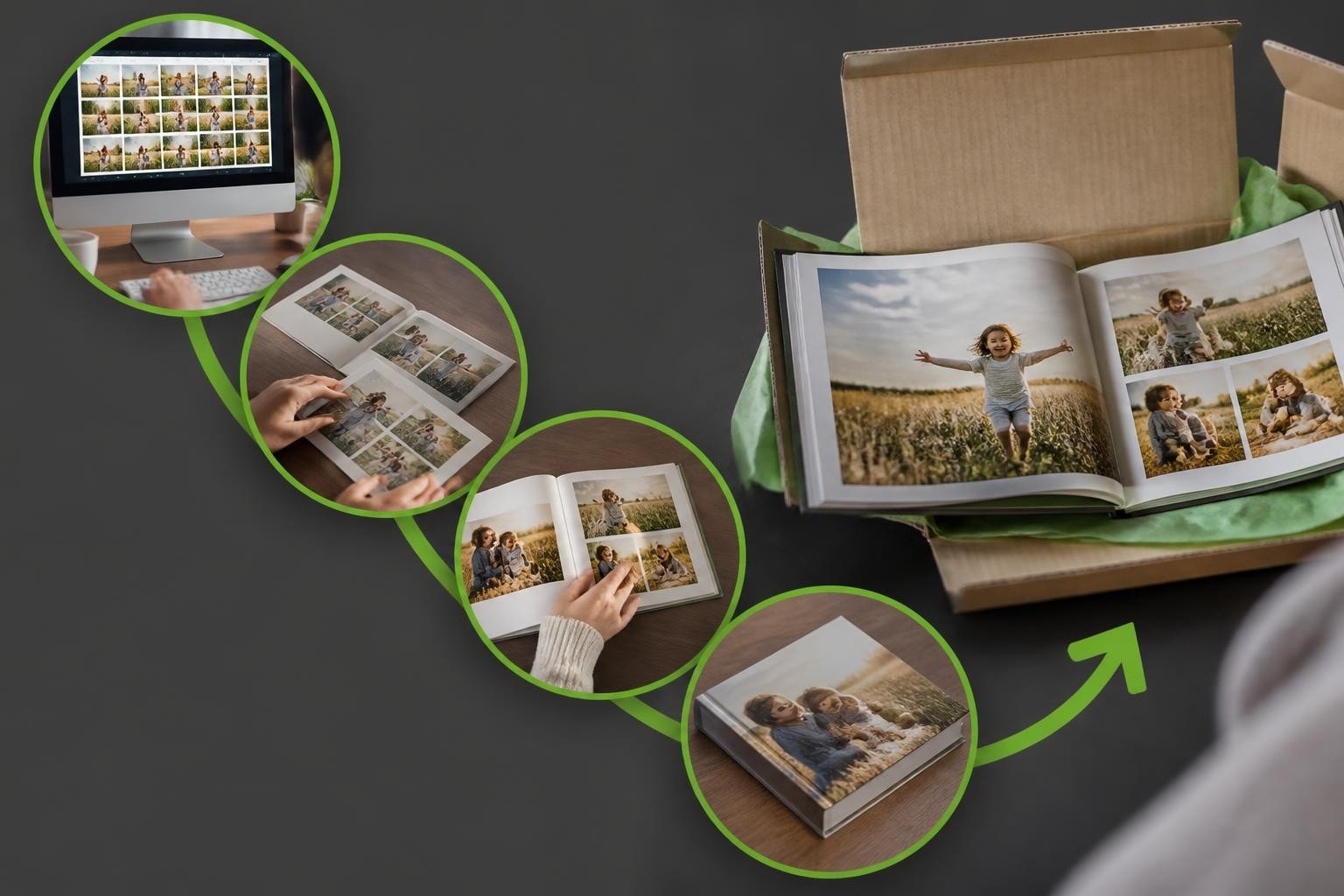
Creating a photograph book represents one of the most meaningful ways to preserve memories, showcase creative work, or deliver professional imagery to clients. Whether you're operating a print business, photography studio, or retail enterprise, understanding the nuances of photograph book creation enables you to offer products that resonate deeply with customers. The photograph book has evolved from simple collections of images into sophisticated, personalised products that combine storytelling, design excellence, and printing technology.
Understanding the Photograph Book Market
The demand for photograph books continues to grow across multiple sectors. Consumers increasingly value tangible products that transform digital images into lasting keepsakes. Professional photographers rely on photograph books to present their work to clients, whilst families cherish them as heirlooms that capture life's milestones.
Modern photograph book production differs significantly from traditional methods. Digital workflows have streamlined the entire process, enabling faster turnaround times whilst maintaining exceptional quality standards. Businesses that embrace these technologies position themselves to meet rising customer expectations.
Market Segments and Opportunities
Different customer segments seek photograph books for distinct purposes:
- Wedding and event photography: Couples invest in premium photograph books to commemorate their special day
- Family milestones: Parents create photograph books documenting children's growth, holidays, and celebrations
- Professional portfolios: Artists and photographers showcase their work through carefully curated photograph books
- Corporate applications: Businesses produce photograph books for marketing, annual reports, and client presentations
- Travel documentation: Enthusiasts compile photograph books from adventures and journeys
Each segment demands specific features and customisation options. Understanding these requirements allows businesses to tailor their offerings effectively.

Essential Design Elements for Compelling Photograph Books
Creating a photograph book that captivates requires attention to fundamental design principles. Layout, composition, and visual flow determine whether a photograph book becomes a treasured item or a forgotten object.
Layout Architecture
The structure of your photograph book establishes its rhythm and narrative. Successful layouts balance consistency with variety, creating visual interest whilst maintaining coherence throughout.
Grid systems provide the foundation for professional photograph book layouts. They ensure alignment, spacing, and proportions remain harmonious across pages. However, rigid adherence to grids can produce monotonous results. Strategic departures from the grid inject energy and emphasis at key moments.
White space serves as a critical design element. Many novice designers fill every available area, creating cluttered, overwhelming pages. Thoughtful use of white space allows photographs to breathe, directing attention and creating sophistication.
| Design Element | Purpose | Implementation Tip |
|---|---|---|
| Grid System | Structural consistency | Use flexible grids that allow creative freedom |
| White Space | Visual breathing room | Allocate 30-40% of page area to negative space |
| Typography | Context and storytelling | Limit to two complementary typefaces |
| Colour Palette | Cohesion and mood | Extract colours from featured photographs |
Image Selection and Sequencing
Choosing which photographs to include represents one of the most challenging aspects of photograph book creation. Quality always supersedes quantity. A photograph book with 50 exceptional images outperforms one containing 200 mediocre shots.
Sequencing determines the narrative flow. Consider how consecutive images relate to one another. Do they build momentum? Create contrast? Establish themes? The history and evolution of photobooks demonstrates how photographers have used sequencing to create powerful visual narratives.
Professional photographers often employ these sequencing strategies:
- Chronological progression: Following events or journeys from beginning to end
- Thematic grouping: Organising by subject matter, colour, or mood
- Rhythmic variation: Alternating between wide shots and details, colour and monochrome
- Emotional arc: Building intensity toward climactic moments before resolution
Technical Specifications That Matter
Beyond aesthetics, technical considerations determine the quality and longevity of your photograph book. Understanding these specifications enables businesses to deliver products that exceed customer expectations.
Resolution and Image Quality
Image resolution directly impacts print quality. Photographs intended for photograph book production should meet minimum resolution requirements based on their printed size. Generally, 300 dots per inch (DPI) at the final print dimension ensures sharp, professional results.
Colour management presents another critical technical aspect. Photographs displayed on screens appear differently when printed due to variations between RGB (screen) and CMYK (print) colour spaces. Implementing proper colour management workflows prevents disappointing results.
Paper and Binding Options
The physical characteristics of your photograph book significantly influence customer perception and product durability:
Paper selections range from glossy to matte finishes, each offering distinct advantages. Glossy papers deliver vibrant colours and sharp detail, ideal for photographs with rich tones. Matte papers reduce glare and fingerprints, creating an elegant, understated presentation.
Binding methods affect both appearance and functionality. Layflat binding allows photograph books to open completely flat, displaying double-page spreads without interruption. Perfect binding offers affordability for thicker photograph books, whilst hardcover options provide premium protection.
| Binding Type | Best For | Durability | Cost |
|---|---|---|---|
| Layflat | Double-page spreads, weddings | Excellent | Premium |
| Perfect Bound | Higher page counts, affordability | Good | Budget-friendly |
| Saddle Stitch | Thin photograph books, quick production | Moderate | Economical |
| Case Bound | Heirloom quality, luxury markets | Superior | Premium |

Implementing Efficient Production Workflows
Businesses that streamline photograph book production gain competitive advantages through faster delivery times and reduced operational costs. Modern photo book software enables automated workflows that maintain quality whilst improving efficiency.
Automation Opportunities
Identifying repetitive tasks within your photograph book workflow reveals automation opportunities. Template creation, image placement suggestions, and quality checks can be partially or fully automated, freeing staff to focus on creative decisions and customer service.
Smart automation respects the need for human oversight. Whilst algorithms excel at technical tasks like colour correction and layout generation, aesthetic judgement remains a human domain. The most successful workflows combine automated efficiency with human refinement.
Quality Control Checkpoints
Establishing quality control checkpoints throughout production prevents costly errors. These checkpoints should verify:
- Image resolution meets specifications for intended print size
- Colour profiles match production requirements
- Text remains free from spelling and grammatical errors
- Bleeds and margins conform to printing specifications
- Page sequencing follows the intended order
Implementing a digital proofing stage allows customers to review their photograph book before production begins. This reduces reprints and enhances satisfaction, as customers feel confident their final product will meet expectations.
Personalisation Strategies That Drive Sales
Personalisation transforms a photograph book from a commodity into a unique creation. Businesses that offer extensive personalised photographs options differentiate themselves in competitive markets.
Customisation Levels
Personalisation exists on a spectrum. At the basic level, customers select from pre-designed templates, adding their photographs and text. More advanced personalisation allows customers to modify layouts, adjust colours, and create entirely custom designs.
The optimal personalisation level depends on your target market. Consumers creating family photograph books often prefer guided templates that simplify decisions. Professional photographers demand granular control over every design element.
Text Integration
Incorporating text within photograph books enhances storytelling and provides context. Captions, dates, and narratives transform a collection of images into a coherent story. However, text requires careful handling to avoid overwhelming the visual content.
Typography choices should complement rather than compete with photographs. Sans-serif typefaces offer clean readability, whilst serif fonts provide traditional elegance. Consistency in font selection, sizing, and placement maintains professional standards throughout the photograph book.
Software Solutions for Photograph Book Creation
Selecting appropriate software determines the capabilities and user experience your business can offer. Solutions range from simple online designers to sophisticated desktop applications, each serving different market needs.
Online Design Platforms
Web-based photograph book designers offer accessibility and convenience. Customers create photograph books from any device without installing software, reducing friction in the purchasing process. Modern online platforms deliver responsive interfaces that work seamlessly across desktop, tablet, and mobile devices.
The online designer approach democratises photograph book creation, enabling customers with minimal design experience to produce professional results through intuitive interfaces and intelligent suggestions.
Desktop Applications
Desktop designer software provides enhanced functionality for power users and professional designers. These applications typically offer advanced features including precise typography control, complex layout options, and sophisticated colour management.
Professional photographers appreciate desktop applications for their ability to handle large file sizes efficiently and integrate with existing photography workflows. The offline nature of desktop software also appeals to users in areas with unreliable internet connectivity.
Marketing and Positioning Your Photograph Book Services
Successfully marketing photograph book services requires understanding customer motivations and addressing them through targeted messaging. Different customer segments respond to distinct value propositions.
Emotional Positioning
Photograph books represent emotional investments. Marketing messages that acknowledge this emotional dimension resonate more powerfully than purely technical descriptions. Consider how influential photobooks have shaped photography as cultural artefacts, not merely as products.
Families creating photograph books seek to preserve memories for future generations. Professional photographers view photograph books as portfolio pieces that showcase their artistic vision. Corporate clients value photograph books as sophisticated marketing tools that convey brand identity.
Demonstrating Value Through Examples
Showcasing exemplary photograph books provides prospective customers with inspiration and demonstrates your capabilities. Sample photograph books should represent diverse styles, subjects, and complexity levels to appeal to broad audiences.
Photography communities continue to value powerful documentary projects that demonstrate the medium's capacity for storytelling. These examples can inspire customers whilst showcasing what's achievable through your services.

Pricing Strategies for Sustainable Profitability
Establishing appropriate pricing for photograph book services requires balancing customer expectations, production costs, and profit margins. Neither racing to the bottom nor overpricing serves long-term business interests.
Cost Components
Understanding complete cost structures enables informed pricing decisions:
- Material costs: Paper, binding materials, covers, and protective packaging
- Production time: Labour for design assistance, quality control, and finishing
- Technology expenses: Software licensing, equipment maintenance, and upgrades
- Overhead allocation: Facilities, utilities, and administrative support
- Shipping and handling: Packaging materials and delivery services
Value-Based Pricing
Rather than competing solely on price, position photograph books based on the value they deliver. Premium pricing becomes justifiable when customers perceive superior quality, exceptional service, or unique features unavailable elsewhere.
Tiered pricing structures accommodate different customer segments. Entry-level photograph books appeal to price-conscious consumers, whilst premium options attract customers seeking luxury presentation and enhanced customisation options.
Ensuring Customer Satisfaction and Retention
Creating exceptional photograph books represents only part of business success. Delivering outstanding customer experiences builds loyalty and generates referrals that fuel sustainable growth.
Communication Throughout Production
Keeping customers informed throughout the photograph book creation process reduces anxiety and builds confidence. Automated updates at key milestones, such as design confirmation, production commencement, and shipment, demonstrate professionalism and attentiveness.
Transparency regarding production timelines sets realistic expectations. Under-promising and over-delivering creates positive surprises, whilst overly optimistic estimates lead to disappointment when delays occur.
Gathering and Implementing Feedback
Systematic feedback collection reveals opportunities for improvement. Post-delivery surveys capture customer impressions whilst experiences remain fresh. Questions should address both product quality and service experience.
Demonstrating responsiveness to feedback builds customer trust. When customers observe their suggestions implemented in future offerings, they feel valued and develop stronger connections to your business. The long-term partnerships that successful companies build often stem from this continuous improvement approach.
Future Trends Shaping Photograph Books
Understanding emerging trends positions businesses to capitalise on evolving customer preferences and technological capabilities. The photograph book industry continues innovating across multiple dimensions.
Augmented reality integration represents one frontier. Photograph books enhanced with AR features allow customers to view videos, hear audio recordings, or access additional content when viewing pages through mobile devices. This bridges physical and digital experiences.
Sustainable production methods increasingly influence purchasing decisions. Environmentally conscious consumers seek photograph books produced using recycled materials, vegetable-based inks, and carbon-neutral shipping. Businesses that prioritise sustainability differentiate themselves amongst growing segments of eco-aware customers.
Artificial intelligence assists with photograph selection, layout optimisation, and even caption generation. These technologies don't replace human creativity but augment it, enabling faster workflows whilst maintaining quality standards. As photography continues evolving as an art form, the tools for creating photograph books will similarly advance.
Creating compelling photograph books requires balancing artistic vision with technical precision whilst delivering exceptional customer experiences. The most successful businesses implement efficient workflows, embrace personalisation, and maintain unwavering quality standards across every production stage. Taopix provides comprehensive software solutions that empower businesses to create outstanding photograph books through flexible workflows, intuitive design tools, and fully customisable user experiences that drive customer satisfaction and business growth.