
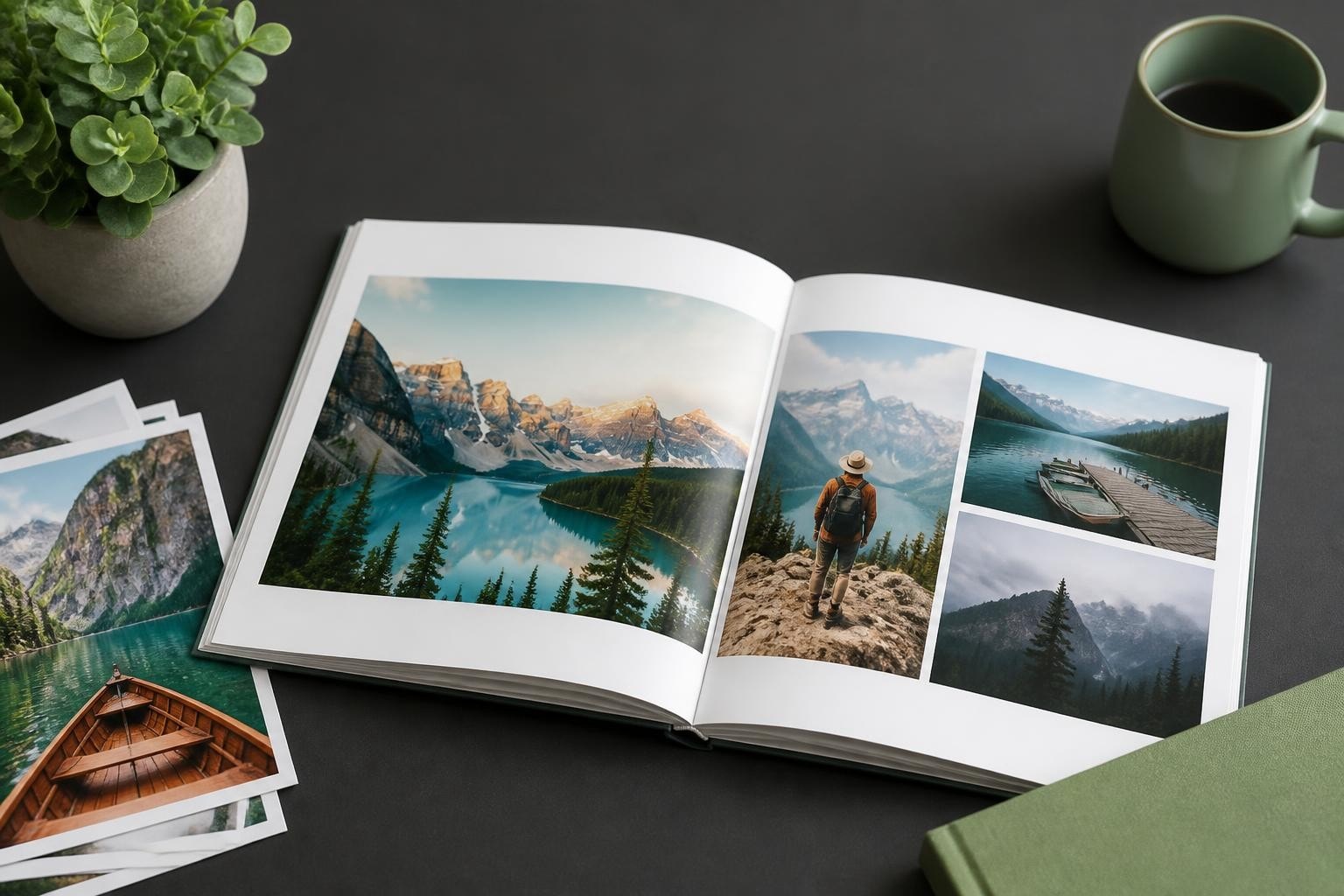
Preserving travel memories has evolved significantly beyond simple photo albums stuffed with holiday snaps. Travel photobooks represent a sophisticated approach to documenting journeys, combining visual storytelling with thoughtful design to create lasting keepsakes. Whether you've explored the wildlife of a Tanzania safari or wandered through European cities, transforming your travel photographs into professionally designed photobooks allows you to relive those experiences whilst sharing them with others. This comprehensive guide explores the essential elements of creating compelling travel photobooks that capture not just images, but the essence of your adventures.
Understanding the Purpose of Travel Photobooks
Travel photobooks serve multiple functions beyond simple documentation. They act as visual narratives that transport viewers to distant locations, allowing you to share your experiences in a curated, meaningful way.
Defining Your Photobook's Audience
Before selecting a single photograph, consider who will view your finished photobook. Are you creating a personal memento, a gift for family members, or perhaps a portfolio showcasing your photography skills? This fundamental decision influences every subsequent choice, from photo selection to layout design.
Personal photobooks typically allow more creative freedom and can include candid moments, experimental compositions, and images that hold personal significance. Family-oriented photobooks benefit from including people in shots, clear landmarks, and chronological organization that helps relatives follow your journey. Portfolio-style photobooks demand exceptional image quality, consistent editing, and cohesive themes that demonstrate technical proficiency.
The audience also determines your photobook's size and format. A large-format coffee table book creates impact when shared with guests, whilst smaller formats suit personal collections or gifts.
Strategic Photo Selection and Organization
Curating images represents perhaps the most challenging aspect of creating travel photobooks. Most travellers return with hundreds or thousands of photographs, yet effective photobooks require ruthless editing.
Implementing the Selection Process
Begin by reviewing all photographs from your journey, rating them based on technical quality, emotional impact, and storytelling value. Remove duplicates, poorly exposed images, and shots that lack clear purpose.
- Technical excellence: Ensure sharpness, proper exposure, and compositional strength
- Emotional resonance: Include images that evoke the feelings you experienced
- Narrative value: Select photographs that advance your story
- Visual diversity: Balance landscapes, details, people, and cultural elements

A practical approach involves creating a shortlist of 200-300 images, then reducing this to your final selection. Most effective travel photobooks contain between 60-120 photographs, though this varies based on your chosen format and design approach. Organizing photos by location, date, and theme creates a foundation for strong visual storytelling.
Organizing Your Visual Narrative
Structure determines how viewers experience your journey. Consider these organizational frameworks:
| Organizational Approach | Best For | Considerations |
|---|---|---|
| Chronological | Multi-destination trips | Maintains journey flow, easy to follow |
| Geographical | Single-country exploration | Groups related experiences, shows regional diversity |
| Thematic | Focused interests (architecture, food, people) | Creates visual coherence, requires strong editing |
| Emotional Arc | Personal journeys | Most complex, highest impact when executed well |
Your organizational choice shapes the entire photobook design. Chronological arrangements work naturally for most travellers, whilst thematic approaches suit photographers with specific interests or projects.
Design Principles for Compelling Layouts
Effective layout design transforms good photographs into exceptional travel photobooks. The visual rhythm created by page arrangements, white space, and image sizing keeps viewers engaged throughout your photobook.
Balancing Visual Elements
Avoid monotonous page designs where every spread follows identical patterns. Instead, create dynamic layouts that emphasize key moments whilst maintaining overall coherence.
Full-page bleeds work beautifully for dramatic landscapes or striking architectural shots. These images extend to the page edges, creating immersive visual experiences. Multiple images per page suit detail shots, street photography, or when showing various perspectives of a single location. White space prevents visual fatigue and allows important images room to breathe.
Consider pacing throughout your photobook. Begin with an impactful opening image, vary the rhythm of single versus multi-image pages, and conclude with a memorable finale that encapsulates your journey.
Typography and Text Integration
Text serves crucial functions in travel photobooks, providing context, sharing stories, and guiding viewers through your narrative. However, excessive text overwhelms visual storytelling.
- Location captions: Brief geographical context
- Date stamps: Chronicle your journey's timeline
- Anecdotes: Short stories that add depth to images
- Quotes: Meaningful phrases from your travels
Font selection impacts readability and aesthetic harmony. Choose clean, legible typefaces that complement rather than compete with your photography. Maintain consistent text placement and sizing throughout the photobook.
Technical Considerations for Professional Results
Image quality directly determines your photobook's final appearance. Understanding technical requirements ensures your printed product matches your expectations.
Resolution and Image Preparation
Professional photobook printing requires images with sufficient resolution. Most photobook software solutions recommend 300 DPI (dots per inch) at the final printed size. A full-page image in an A4 photobook needs approximately 2480 x 3508 pixels.
Review your photographs at 100% magnification to identify sharpness issues, noise, or compression artifacts that become visible in print. Minor editing improvements-adjusting exposure, enhancing saturation, or correcting white balance-can significantly elevate image quality.

Taopix’s online designer provides flexible workflows that help businesses ensure images meet quality standards whilst giving customers creative control over their photobook designs.
Colour Management and Consistency
Colour accuracy matters enormously when printing travel photobooks. Monitors display colours using RGB (red, green, blue) whilst printers use CMYK (cyan, magenta, yellow, black), creating potential colour shifts.
Maintain consistent editing styles across all photographs. If you've applied a warm tone to sunset images, ensure similar lighting conditions receive comparable treatment. This cohesion creates visual harmony throughout your photobook.
Storytelling Techniques for Travel Photobooks
Exceptional travel photobooks transcend simple photo collections by employing narrative techniques that engage viewers emotionally and intellectually.
Building Narrative Arc
Structure your photobook like a story with beginning, middle, and end. The opening pages establish context-perhaps departure preparations or arrival shots. Middle sections explore your destinations in depth, whilst closing pages offer reflection or departure scenes.
Establishing shots provide geographical context before diving into details. A wide shot of a cityscape orients viewers before you show street-level photographs. Detail images reveal textures, colours, and cultural elements that wide shots miss. Transition pages bridge different locations or themes, preventing jarring shifts.
For those documenting safari adventures with companies like Tanzania Small 5 Safaris, your photobook might progress from landscape establishing shots to wildlife encounters, cultural experiences, and finally departure reflections, creating a complete narrative arc.
Incorporating Cultural Context
Travel photobooks gain depth when they include cultural elements beyond tourist attractions. Photograph local markets, daily life moments, traditional crafts, or architectural details that reveal a destination's character.
Include images showing:
- People and portraits (with permission)
- Local cuisine and dining experiences
- Traditional practices or ceremonies
- Everyday street scenes
- Natural environments beyond landmarks
This approach creates richer documentation whilst respecting the places you've visited. Understanding practical do’s and don’ts helps ensure your photobook balances aesthetic appeal with cultural sensitivity.
Format and Binding Considerations
Physical specifications significantly impact how viewers experience your travel photobooks. Size, orientation, binding style, and paper quality all contribute to the final product's appeal.
Choosing Dimensions and Orientation
Common photobook sizes serve different purposes:
| Size | Dimensions (approx) | Best For |
|---|---|---|
| Small Square | 20cm x 20cm | Instagram-style collections, quick trips |
| Medium Landscape | 28cm x 21cm | Panoramic travel photography |
| Large Portrait | 30cm x 40cm | Showcase format, coffee table display |
| Standard A4 | 21cm x 29.7cm | Versatile option, balanced costs |
Landscape orientation suits wide vistas, architectural photography, and panoramic scenes. Portrait orientation works well for street photography, wildlife shots, and vertical compositions. Square formats offer balanced versatility.
Binding and Paper Selection
Layflat binding allows pages to open completely flat, creating seamless double-page spreads without gutters interrupting images. This premium option suits dramatic landscape photography but increases production costs.
Perfect binding creates traditional book spines and suits photobooks with substantial page counts. Images near the spine require careful positioning to avoid important elements disappearing into the gutter.
Paper finish affects image appearance and tactile experience. Glossy papers enhance colour vibrancy and contrast, ideal for bold, saturated photography. Matte papers reduce glare and create sophisticated, gallery-like presentations. Lustre finishes offer compromise between glossy vibrancy and matte elegance.
Seasonal and Thematic Approaches
Different travel experiences benefit from tailored photobook approaches that emphasize their unique characteristics.
Seasonal Travel Documentation
Seasonal travel presents distinct visual opportunities. Winter journeys feature dramatic landscapes with snow, unique lighting, and festive cultural elements. Summer travels often include vibrant colours, outdoor activities, and extended daylight photography opportunities.
Organize seasonal photobooks to emphasize temporal progression. A winter mountain retreat photobook might progress from crisp morning light through midday activities to evening aurora displays, creating natural chapter divisions.
Multi-Destination Journeys
Extended trips covering multiple countries or regions require thoughtful organization to prevent overwhelming viewers. Consider these structural approaches:
- Chapter divisions separating each destination
- Visual transitions using travel photographs (airports, trains, roads)
- Consistent opening patterns for each new location
- Comparative spreads showing similar subjects across destinations
Multi-destination travel photobooks benefit from consistent design elements whilst allowing individual sections unique character reflecting each location's atmosphere.

Business Applications for Travel Photobooks
Beyond personal use, travel photobooks serve professional purposes for tourism businesses, photographers, and travel service providers.
Marketing and Portfolio Uses
Professional photographers use travel photobooks as tangible portfolios showcasing their skills to potential clients. Unlike digital presentations, physical photobooks create memorable impressions during client meetings.
Tourism companies can create destination photobooks highlighting the experiences they offer. These serve as powerful marketing tools, allowing prospective customers to visualize their potential journeys. Travel agents might provide photobook creation services as value-added offerings for clients returning from booked trips.
Technology Solutions for Businesses
Businesses offering travel photobook creation services require robust software solutions supporting various formats, customization options, and efficient production workflows. Taopix provides flexible software solutions that enable businesses to offer fully customisable photobook creation experiences whilst maintaining streamlined production processes.
The technology supporting photobook creation must balance customer-facing design tools with backend production efficiency. Businesses need solutions allowing template customization, brand integration, and quality control whilst giving customers creative freedom.
Advanced Design Techniques
Sophisticated travel photobooks employ design techniques that elevate them beyond basic photo collections into compelling visual narratives.
Creating Visual Rhythm
Effective photobooks establish rhythms through page design variations, creating engagement whilst maintaining cohesion. Alternate between full-bleed dramatic images and detail-oriented multi-image spreads. Use white space strategically to create breathing room after visually dense sections.
Consider these rhythm patterns:
- Impact page: Full-bleed landscape
- Detail spread: 4-6 smaller images showing elements
- Story page: Single image with accompanying text
- Panoramic spread: Image spanning both pages
- Breathing space: Minimal page with single small image
This varied approach maintains viewer interest throughout longer photobooks whilst preventing visual fatigue.
Advanced Layout Strategies
Grid-based layouts create clean, organized presentations particularly effective for architectural or urban photography. Asymmetrical arrangements add dynamic energy suitable for action-oriented travel or festival documentation. Overlapping elements create depth and complexity when executed carefully, though they risk appearing cluttered if overused.
Experiment with image borders, frames, and edge treatments. Thin white borders separate images whilst maintaining clean aesthetics. Borderless bleeds create immersive experiences. Mixing approaches within a single photobook requires careful planning to maintain coherence.
Preservation and Longevity Considerations
Travel photobooks represent significant investments of time, creativity, and financial resources. Ensuring their longevity protects these valuable memory archives.
Quality Materials and Archival Standards
Professional printing uses archival-quality inks and papers designed for longevity. Pigment-based inks resist fading significantly better than dye-based alternatives, maintaining colour accuracy for decades when stored properly.
Paper quality affects both immediate appearance and long-term preservation. Acid-free papers prevent yellowing and deterioration. Higher paper weights feel more substantial and resist damage from handling.
Storage and Care Guidelines
Proper storage extends photobook lifespan considerably. Store photobooks vertically on shelves rather than stacked horizontally, preventing spine stress. Maintain stable temperature and humidity levels, avoiding attics, basements, or other areas with extreme fluctuations.
Protection measures include:
- Keeping photobooks away from direct sunlight
- Using archival-quality storage boxes for long-term storage
- Handling with clean hands to prevent oil transfer
- Avoiding eating or drinking near photobooks
- Periodically inspecting for environmental damage
Cultural and Ethical Photography Considerations
Creating travel photobooks involves ethical responsibilities regarding how we represent places, people, and cultures we've visited.
Respectful Representation
Photograph people with permission and dignity. Avoid exploitative imagery that reduces individuals to exotic subjects. Consider whether images perpetuate stereotypes or present balanced, respectful cultural documentation.
When photographing in religious sites, markets, or private spaces, respect local customs and restrictions. Some cultures prohibit photography in certain contexts; honour these boundaries even when they limit your photobook content.
Attribution and Context
If your travel photobook includes cultural practices, historical sites, or traditional elements, provide appropriate context. Brief captions explaining significance demonstrate respect whilst educating viewers.
Consider the stories your photobook tells about destinations. Do they present balanced perspectives, or do they focus exclusively on tourist-oriented views? Thoughtful curation creates more meaningful documentation whilst respecting the complexity of places visited.
Future Trends in Travel Photobook Creation
The photobook industry continues evolving with technological advances and changing consumer preferences shaping how we create and share travel memories.
Digital Integration
Modern travel photobooks increasingly incorporate digital elements. QR codes linking to video content, augmented reality features, or audio narratives add multimedia dimensions to traditional photobooks. These hybrid approaches appeal particularly to younger audiences expecting interactive experiences.
Cloud-based design tools enable collaborative photobook creation, allowing travel companions to contribute images and stories to shared projects. This social dimension reflects how we increasingly document travels through multiple perspectives.
Sustainable Production
Environmental consciousness influences photobook production choices. Businesses increasingly offer eco-friendly options including recycled papers, vegetable-based inks, and carbon-neutral shipping. Sustainable practices resonate with environmentally aware consumers whilst supporting responsible business operations.
On-demand printing reduces waste compared to traditional offset printing, allowing customers to order precisely what they need without excess inventory. This efficiency benefits both businesses and environment.
Creating exceptional travel photobooks requires balancing technical excellence with creative storytelling, transforming collections of holiday photographs into compelling visual narratives. Whether you're preserving personal memories or developing professional portfolio pieces, thoughtful curation, design, and production choices determine your photobook's impact and longevity. Taopix empowers businesses to offer comprehensive photobook creation solutions with flexible workflows and fully customisable experiences, enabling customers to transform their travel memories into beautifully crafted keepsakes that preserve adventures for years to come.