
The print and photo personalisation industry has undergone a dramatic transformation over the past decade. Businesses no longer build custom software from scratch; instead, they leverage sophisticated platforms that can be rebranded and deployed under their own identity. White label personalisation software has emerged as the foundation for thousands of successful photobook, calendar, and personalised gift businesses worldwide, enabling companies to offer powerful customisation tools without years of development investment.
Understanding White Label Personalisation Software Architecture
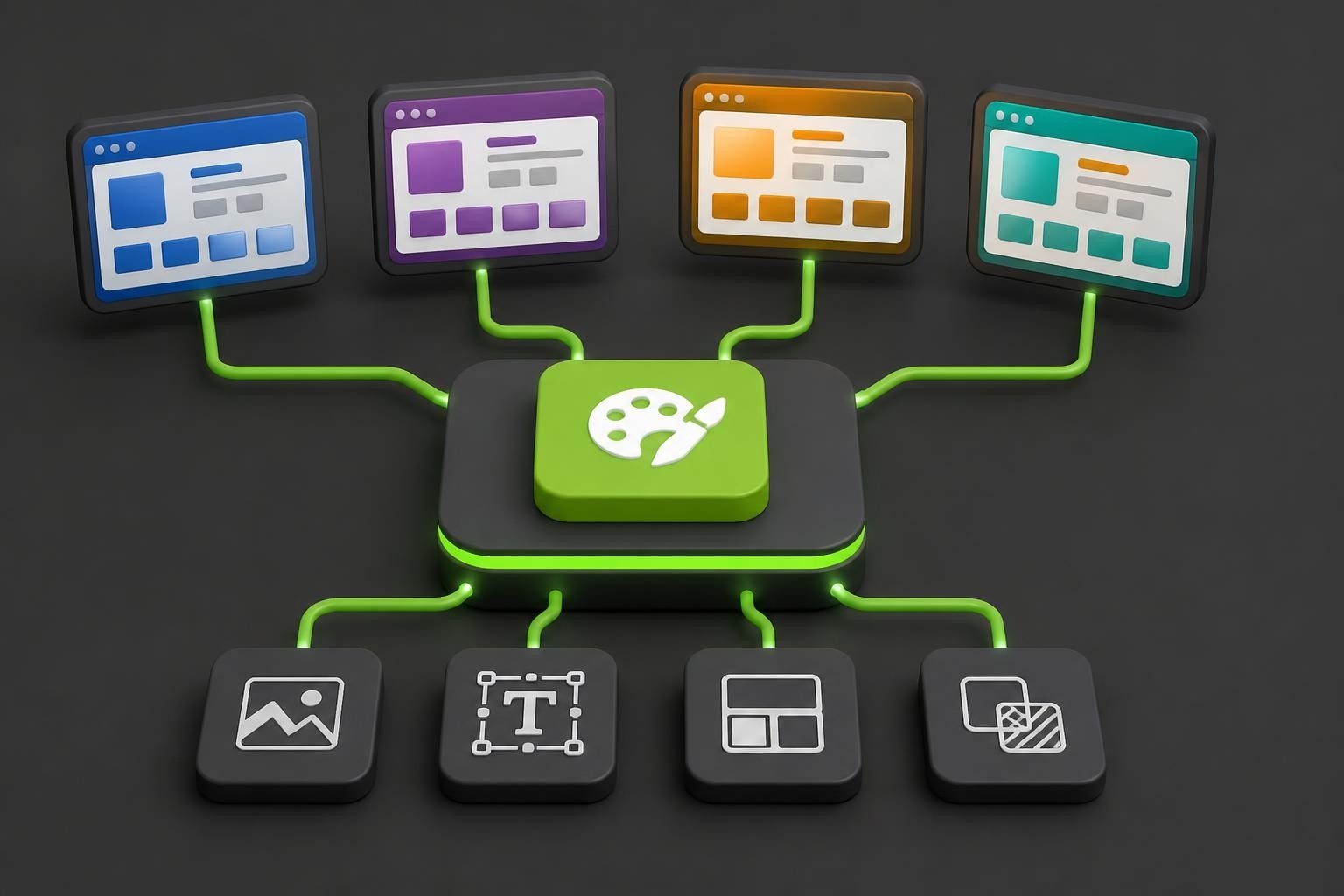
White label personalisation software operates on a multi-tenant architecture where a single platform serves multiple clients, each presenting the software under their own brand. This approach differs fundamentally from traditional off-the-shelf solutions or fully custom development.
The core architecture typically consists of three distinct layers: the presentation layer, which customers see and interact with; the business logic layer, which processes personalisation rules and workflows; and the data persistence layer, which stores templates, user creations, and asset libraries. Each tenant receives isolated data spaces whilst sharing the underlying infrastructure.
Technical Foundation and Multi-Tenancy
Modern white label personalisation software must balance customisation flexibility with operational efficiency. The multi-tenant security considerations for these systems require careful attention to tenant isolation, ensuring one client's data never leaks into another's workspace.
Key architectural components include:
- Tenant-specific configuration databases
- Shared computational resources with logical partitioning
- API-first design for headless deployment options
- Asset management systems supporting branded templates
- Rendering engines capable of high-resolution output
The SaaS architecture fundamentals document provides comprehensive guidance on building scalable multi-tenant systems, principles that directly apply to white label personalisation platforms.

Customisation Versus Personalisation in White Label Solutions
Understanding the distinction between customisation and personalisation proves crucial when evaluating white label solutions. Research from Nielsen Norman Group clarifies that customisation refers to modifications users make explicitly, whilst personalisation happens automatically based on user behaviour and preferences.
White label personalisation software must support both paradigms. The photobook creator might customise layout choices, font selections, and template preferences explicitly. Simultaneously, the system personalises the experience by suggesting relevant templates based on past projects, recommending appropriate product formats, or auto-populating calendar dates based on geographic location.
Deployment Models and Integration Strategies
Organisations deploying white label personalisation software face several architectural decisions that significantly impact time-to-market, ongoing maintenance costs, and customer experience quality.
Cloud-Native Versus Hybrid Deployments
| Deployment Model | Advantages | Considerations | Best For |
|---|---|---|---|
| Fully Cloud-Native | Rapid deployment, automatic scaling, minimal infrastructure | Ongoing subscription costs, less control | Businesses prioritising speed to market |
| Hybrid Cloud | Data sovereignty options, legacy system integration | Complex architecture, higher maintenance | Enterprises with existing infrastructure |
| On-Premises | Complete control, one-time licensing | Higher upfront costs, scaling limitations | Organisations with strict data requirements |
The choice significantly affects how businesses implement personalised product software capabilities within their existing technology stacks.
API-First Integration Approaches
Modern white label personalisation software increasingly adopts API-first design principles, enabling businesses to integrate personalisation capabilities into diverse customer touchpoints. This approach allows photobook software functionality to surface within mobile applications, web portals, kiosk interfaces, and even third-party platforms.
Integration typically requires:
- Authentication and tenant identification
- Asset synchronisation and template distribution
- Real-time preview rendering
- Order submission and fulfilment routing
- Analytics and usage tracking
Oracle's documentation on adding personalisation to headless applications demonstrates practical implementation patterns applicable across industries, including print and photo personalisation contexts.
Business Benefits and Strategic Advantages
White label personalisation software delivers measurable advantages that extend beyond simple cost savings compared to custom development.
Time-to-Market Acceleration
Building sophisticated photobook creation software from scratch requires 18-36 months of development effort. White label solutions reduce this timeline to weeks or months, allowing businesses to capture market opportunities whilst competitors struggle with development backlogs.
Speed advantages manifest across:
- Immediate access to proven user interfaces
- Pre-built template libraries and design assets
- Established rendering and production workflows
- Tested integration patterns with fulfilment systems
- Ongoing feature updates without dedicated development teams
Cost Structure Transformation
The financial model shifts from capital expenditure to operational expenditure, fundamentally changing how businesses budget for technology capabilities.
| Cost Category | Custom Development | White Label Solution |
|---|---|---|
| Initial Investment | £250,000 – £1,500,000 | £5,000 – £50,000 |
| Time to Launch | 18-36 months | 2-12 weeks |
| Ongoing Maintenance | 15-20% of build cost annually | Included in subscription |
| Feature Updates | Separate projects | Continuous delivery |
| Scaling Costs | Infrastructure + development | Usage-based pricing |
This transformation enables smaller businesses to compete with established players whilst allowing larger enterprises to focus capital on core differentiators rather than commodity technology.

Essential Features and Capabilities
Evaluating white label personalisation software requires understanding which capabilities deliver genuine customer value versus superficial marketing features.
Core Personalisation Functionality
The foundation of effective photobook software centres on intuitive creation tools that accommodate users ranging from design novices to professional photographers.
Critical capabilities include:
- Drag-and-drop layout builders with intelligent object snapping
- Automatic photo enhancement and colour correction
- Template libraries categorised by occasion, style, and product type
- Text editing with comprehensive typography controls
- Background removal and image manipulation tools
- Multi-page design with consistent theme application
- Real-time 3D preview rendering
Advanced Recommendation Systems
Sophisticated white label personalisation software increasingly incorporates recommendation engines that suggest relevant products, layouts, and design elements based on customer behaviour patterns.
Implementation approaches vary from rule-based systems to machine learning models. The AWS Personalize Developer Guide demonstrates production-grade recommendation capabilities that can be embedded within white label platforms, offering real-time personalisation at scale.
These systems analyse factors including:
- Previous product purchases and creation history
- Photo collection characteristics and volume
- Seasonal timing and upcoming occasions
- Price sensitivity and product tier preferences
- Design complexity preferences
Brand Customisation Depth
The "white label" designation becomes meaningless if customisation options remain superficial. Comprehensive platforms offer multi-layer branding capabilities extending far beyond logo placement.
Branding customisation should encompass:
- Complete visual theme control (colours, typography, imagery)
- Customisable user interface workflows and navigation
- Branded communications templates (emails, confirmations)
- Custom domain deployment and SSL certification
- Localisation for multiple languages and regional preferences
- Configurable product catalogues and pricing structures
Technical Considerations for Print Businesses
Print and photo personalisation businesses face unique technical requirements that generic white label personalisation software may not adequately address.
Colour Management and Output Quality
Professional print production demands precise colour management throughout the creation workflow. Software must support ICC colour profiles, CMYK colour spaces, and appropriate colour conversion algorithms to ensure screen previews accurately represent printed output.
The rendering engine must generate print-ready files meeting specific production requirements:
- Minimum 300 DPI resolution for photographic output
- Correct bleed and margin specifications
- Embedded fonts and flattened transparency
- Appropriate file formats (PDF/X-4, TIFF, or production-specific)
- Colour profile embedding for automated workflow integration
Production Workflow Integration
White label personalisation software exists within a broader production ecosystem. Seamless integration with order management, production queuing, and fulfilment systems determines operational efficiency.
Integration requirements typically include:
| Integration Point | Data Exchange | Automation Opportunity |
|---|---|---|
| Order Management | Customer details, product specifications, pricing | Automated order creation and status updates |
| Production Systems | Print-ready files, quantity, finishing requirements | Direct-to-production routing without manual intervention |
| Inventory Management | Product availability, component stock levels | Real-time product catalogue updates |
| Shipping Systems | Delivery addresses, service levels, tracking | Automated despatch and customer notifications |
| Payment Processing | Transaction details, refund handling | Seamless checkout without system transitions |
Taopix has demonstrated these integration capabilities through partnerships with businesses like PTRI in Taiwan and H&H Color Lab, enabling them to deploy sophisticated personalisation experiences whilst maintaining efficient production workflows.

Scalability and Performance Requirements
As personalisation businesses grow, software platforms must scale gracefully across multiple dimensions simultaneously.
Computational Scaling Challenges
Photo personalisation presents unique computational demands. High-resolution image manipulation, real-time preview rendering, and complex layout calculations require substantial processing power. A single photobook creation session might generate hundreds of preview renders as customers adjust layouts and positioning.
Modern white label personalisation software addresses these challenges through:
- Client-side rendering for immediate visual feedback
- Server-side optimisation for final output quality
- Intelligent caching of common operations and assets
- Progressive loading strategies for large photo collections
- Distributed rendering across multiple compute nodes
Storage and Asset Management
Photobook businesses accumulate enormous asset libraries over time. Template collections, customer photo uploads, completed projects, and reorder archives can reach petabytes of data for established businesses.
Effective platforms implement:
- Tiered storage with automatic archival of inactive projects
- Intelligent compression without visible quality degradation
- Content delivery networks for global performance
- Deduplication to eliminate redundant photo storage
- Secure deletion protocols meeting privacy regulations
Security, Privacy, and Compliance
White label personalisation software handling personal photos and customer data faces stringent security and privacy requirements.
Data Protection and Privacy
Photo personalisation involves processing deeply personal content including family photographs, personal celebrations, and private moments. Platform security must protect this sensitive data across its entire lifecycle.
Security measures should include:
- Encryption at rest and in transit (TLS 1.3 minimum)
- Role-based access controls with granular permissions
- Comprehensive audit logging of all data access
- Secure credential management without password exposure
- Regular security assessments and penetration testing
- GDPR, CCPA, and regional privacy regulation compliance
The OWASP Multi-Tenant Security Cheat Sheet provides essential guidance for protecting customer data within multi-tenant architectures.
Intellectual Property and Licensing
White label personalisation software must address complex intellectual property considerations, particularly around template designs, font licensing, and decorative elements.
Platform providers should offer:
- Clear licensing terms for all included assets
- Commercial-use rights for customer-facing deployments
- Mechanisms to upload and manage proprietary templates
- Copyright protection for user-generated content
- Compliance tools for restricted imagery detection
Implementation Success Factors
Deploying white label personalisation software successfully requires more than technical configuration. Businesses must address organisational, operational, and customer experience dimensions simultaneously.
Phased Rollout Strategies
Rushing implementation often leads to customer confusion and operational disruptions. Successful businesses adopt phased approaches that manage risk whilst building confidence.
Recommended implementation phases:
| Phase | Duration | Focus Areas | Success Metrics |
|---|---|---|---|
| Pilot | 4-8 weeks | Internal testing, template creation, workflow validation | Zero critical defects, staff confidence |
| Soft Launch | 6-12 weeks | Limited customer segment, controlled volume | Customer completion rates, support ticket volume |
| Parallel Operation | 8-16 weeks | Both systems available, gradual migration | System preference, quality comparison |
| Full Deployment | Ongoing | Complete transition, legacy system sunset | Customer satisfaction, operational efficiency |
Staff Training and Change Management
New software requires new skills. Print businesses often underestimate training requirements, assuming intuitive interfaces eliminate learning curves.
Comprehensive training programmes address:
- Platform navigation and core functionality
- Troubleshooting common customer issues
- Advanced features and creative techniques
- Production file validation and quality control
- System administration and configuration management
Future Trends and Emerging Capabilities
White label personalisation software continues evolving rapidly, incorporating emerging technologies that enhance creative possibilities and operational efficiency.
Artificial Intelligence Integration
AI capabilities are transforming personalisation from manual design processes into assisted creation experiences. Machine learning models now handle tasks including automatic photo selection, intelligent cropping, layout optimisation, and even complete design generation from minimal input.
Academic research on large language models for recommendation points toward future capabilities where conversational interfaces guide customers through creation processes, suggesting products and designs based on natural language descriptions of desired outcomes.
Augmented Reality Preview
Customers increasingly demand confidence that their personalised products will meet expectations. Augmented reality preview capabilities allow customers to visualise photobooks, calendars, and wall art within their actual physical environments before purchasing.
This technology reduces return rates whilst increasing customer confidence and average order values.
Sustainability Features
Environmental consciousness drives demand for sustainability features within personalisation software. Modern platforms incorporate carbon footprint calculations, sustainable material recommendations, and optimised layouts that minimise paper waste during production.
These features align with corporate sustainability commitments whilst resonating with environmentally conscious consumers.
Vendor Selection Criteria
Choosing white label personalisation software represents a strategic decision with long-term implications. Businesses should evaluate potential partners across multiple dimensions beyond feature checklists.
Technical Assessment Areas
Critical evaluation criteria include:
- Platform uptime history and service level agreements
- Rendering quality and colour accuracy for print production
- Mobile responsiveness and cross-device consistency
- API comprehensiveness for custom integrations
- Performance under peak load conditions
- Disaster recovery and business continuity capabilities
Partnership and Support Considerations
Software capabilities matter less than vendor partnership quality. The most sophisticated platform becomes worthless if the provider lacks responsive support or commitment to ongoing development.
Assess potential partners on:
- Implementation support depth and duration
- Ongoing technical support responsiveness and availability
- Product roadmap transparency and customer input opportunities
- User community engagement and knowledge sharing
- Training resource quality and accessibility
- Contract flexibility and exit provisions
White label personalisation software has transformed the photobook and personalised print industry, enabling businesses of all sizes to offer sophisticated creation experiences previously available only to large enterprises with extensive development resources. The strategic advantages extend beyond cost savings to include faster time-to-market, continuous innovation, and the ability to focus resources on customer relationships rather than technology development. If you're ready to elevate your personalised product offerings with proven, flexible technology, Taopix provides comprehensive solutions designed specifically for the print and photo personalisation industry, combining powerful creation tools with the customisation depth your brand deserves.