
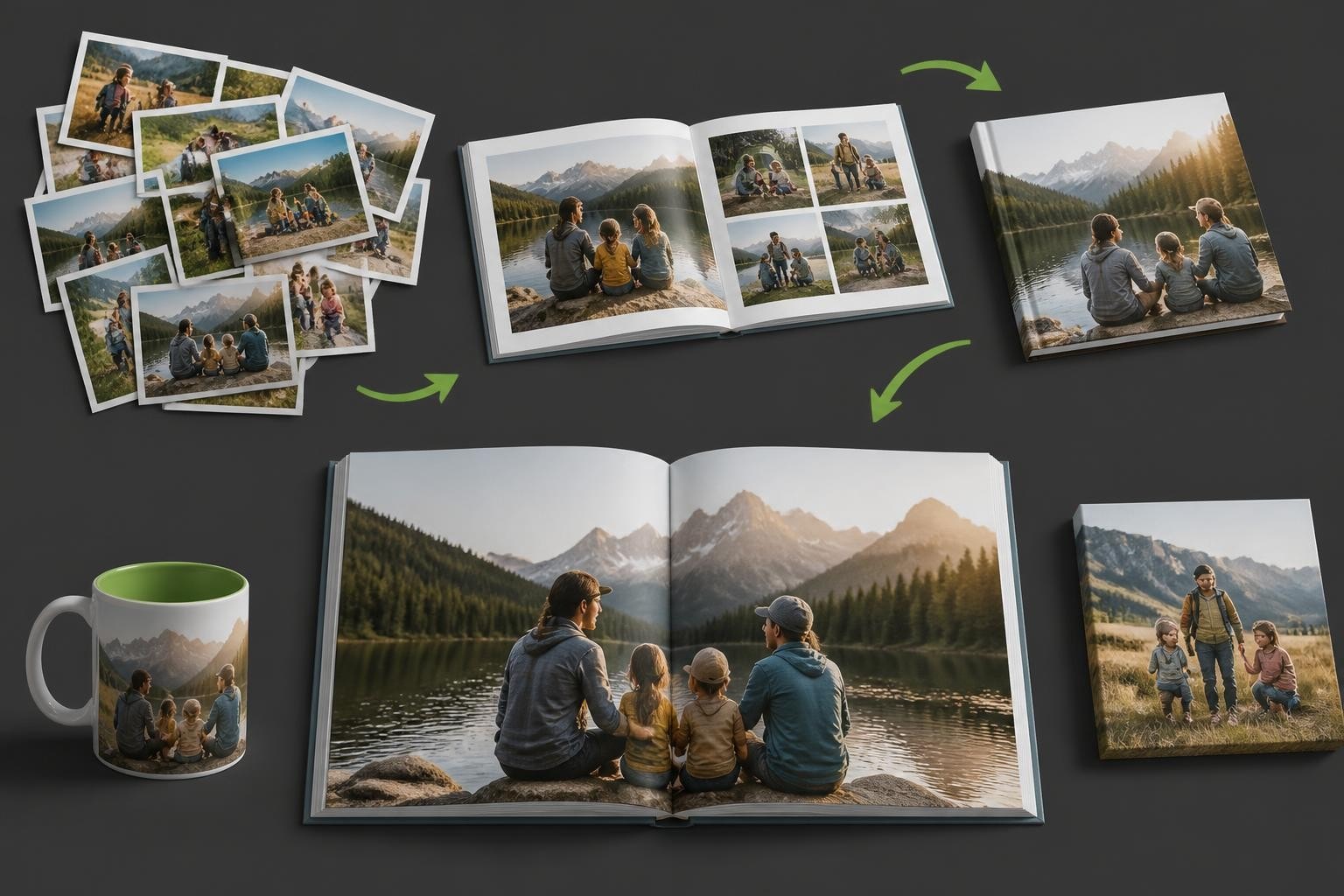
Photo book personalisation has evolved from a simple novelty into a sophisticated market expectation. Today's consumers demand more than basic templates and drag-and-drop interfaces. They expect intelligent design assistance, seamless integration of their personal memories, and the flexibility to create products that genuinely reflect their individual stories. For software providers and print businesses, meeting these expectations requires balancing automation with creative freedom, efficiency with emotional resonance, and technological capability with intuitive user experience.
The Evolution of Personalisation Technology
The photo book industry has undergone remarkable transformation over the past decade. What began as rudimentary online editors has matured into sophisticated platforms capable of understanding context, suggesting layouts, and anticipating user needs.
Modern photo book personalisation relies on advanced algorithms that analyse image content, detect faces, identify landscapes, and even recognise event types. This intelligence enables software to pre-populate designs with relevant photographs whilst maintaining user control over final decisions.
From Manual Design to Intelligent Assistance
Traditional photo book creation demanded considerable time and design expertise. Users manually selected every photograph, positioned each image precisely, and adjusted layouts one page at a time. This process, whilst offering complete control, created significant barriers for consumers lacking design confidence.
Contemporary platforms now offer graduated levels of assistance:
- Fully automated creation that generates complete books from photo selections
- Semi-automated layouts with intelligent suggestions users can modify
- Template-based systems providing structure whilst allowing customisation
- Blank canvas options for experienced designers seeking total control
The State of Personalization 2025/26 report reveals that print businesses increasingly adopt hybrid approaches, combining automation efficiency with personalisation depth to satisfy diverse customer preferences.

Key Personalisation Features Driving Engagement
Successful photo book personalisation extends beyond simply adding names or dates. It encompasses comprehensive customisation spanning visual design, content organisation, and emotional storytelling.
Design Flexibility and Brand Consistency
Professional-grade photo book software must support extensive design customisation whilst maintaining brand coherence. Businesses require the ability to:
- Define colour palettes matching corporate or seasonal themes
- Control typography across projects without sacrificing readability
- Implement custom templates reflecting brand identity
- Adjust layouts dynamically based on image orientation and quantity
Personalised albums demonstrate how thoughtful design systems empower users to create professional-quality products without formal design training.
Text and Caption Personalisation
Words transform photo collections into narratives. Effective photo book personalisation provides multiple text integration methods:
- Automated caption generation pulling from image metadata
- Custom text boxes with flexible positioning and formatting
- Pre-designed quote templates for inspirational messaging
- Handwriting font options adding personal touches
- Multi-language support for international audiences
| Feature | User Benefit | Technical Requirement |
|---|---|---|
| Smart caption placement | Prevents text overlapping important image areas | Image analysis algorithms |
| Font pairing suggestions | Ensures visual harmony without design knowledge | Typography rule engine |
| Character limit warnings | Maintains layout integrity across pages | Real-time validation |
| Spell-check integration | Professional finish reducing errors | Dictionary API |
Consumer Psychology Behind Personalisation Demand
Understanding why customers value photo book personalisation helps software providers develop more effective features. The demand transcends aesthetic preference, touching fundamental human needs.
Emotional Connection and Memory Preservation
Photo books serve as tangible memory vessels in an increasingly digital world. According to research into how personalization drives photo books, consumers perceive personalised print products as having significantly higher emotional value than generic alternatives.
This emotional premium influences purchasing decisions across demographics. Grandparents creating family histories, parents documenting childhood milestones, and travellers preserving adventures all seek personalisation that honours their unique experiences.
Key psychological drivers include:
- Identity expression through design choices reflecting personal style
- Narrative control determining how stories are told and remembered
- Gift significance demonstrating thought investment beyond monetary value
- Legacy creation building tangible heirlooms for future generations
The Effort Paradox
Interestingly, photo book personalisation exists within a paradox. Whilst consumers demand extensive customisation options, they simultaneously resist time-consuming creation processes. This tension shapes product development priorities.
Successful platforms resolve this paradox through intelligent defaults. By providing professionally designed starting points that users can easily modify, software reduces initial effort whilst preserving personalisation depth. The 2026 trends in personalised photo products highlight how automatic layout generation combined with theme matching capabilities addresses this challenge.

Technical Architecture Supporting Personalisation
Behind every intuitive personalisation interface lies complex technical infrastructure. Software providers must architect systems balancing performance, flexibility, and scalability.
Data Management and Image Processing
Effective photo book personalisation requires robust data handling capabilities. Systems must process high-resolution images quickly whilst maintaining quality throughout the design process.
Modern platforms implement:
- Cloud-based storage enabling access across devices
- Progressive image loading ensuring responsive editing experiences
- Automatic colour correction improving photograph quality
- Smart cropping algorithms optimising image positioning within layouts
Workflow Flexibility for Print Businesses
Print service providers need software supporting varied business models. Some operate as pure fulfilment centres, whilst others offer design services or retail experiences. Photo book personalisation platforms must accommodate these different workflows.
Taopix's flexible workflow solutions demonstrate how customisable systems serve diverse business requirements, from fully automated online ordering to assisted in-store design sessions.
Personalisation Options by Product Category
Different photo book types demand distinct personalisation approaches. A travel photo book requires different features than a wedding album or corporate yearbook.
Travel Photography Collections
Travel photobooks benefit from location-aware personalisation features. GPS metadata enables automatic map integration, whilst date information helps chronological organisation.
Effective travel photo book personalisation includes:
- Map overlays showing journey routes
- Location stamps identifying photograph settings
- Weather and temperature data for context
- Currency conversion displays for budget documentation
Wedding and Event Albums
Premium event documentation demands sophisticated personalisation supporting formal design conventions. These products typically require:
- Guest name integration for place settings and thank-you sections
- Timeline visualisation documenting event progression
- Vendor credit pages acknowledging professional services
- Multi-photographer integration combining various perspectives
- Archival quality options ensuring longevity
| Product Type | Priority Personalisation Features | Typical Page Count |
|---|---|---|
| Travel Books | Maps, location stamps, chronology | 40-80 pages |
| Wedding Albums | Guest lists, timelines, formal layouts | 60-120 pages |
| Family Yearbooks | Growth tracking, milestones, quotes | 30-50 pages |
| Corporate Projects | Branding integration, team photos | 20-40 pages |
| Baby Books | Development milestones, measurements | 30-60 pages |
Automation Versus Creative Control
The central challenge in photo book personalisation involves balancing automation efficiency with creative freedom. Too much automation risks generic results lacking personal touch; insufficient automation creates frustrating complexity.
Smart Template Systems
Advanced template architectures adapt to content rather than forcing content into rigid structures. These intelligent systems detect image quantities, orientations, and subject matter, then adjust layouts accordingly.
When users upload fifty landscape photographs versus thirty portrait images, smart templates reconfigure page designs automatically. This responsiveness maintains visual quality across varied content whilst reducing manual adjustments.
User Skill Level Adaptation
Sophisticated platforms recognise that different users possess varying design capabilities and time availability. Adaptive interfaces present appropriate feature complexity based on user behaviour patterns.
Beginners receive simplified options with clear guidance, whilst experienced designers access advanced controls. This progressive disclosure prevents overwhelming novices whilst satisfying power users.

Market Trends Shaping Personalisation Development
The global photobooks and albums market analysis identifies several trends influencing how personalisation features evolve.
Mobile-First Design Tools
Smartphone photography dominance necessitates mobile-capable personalisation tools. Consumers increasingly expect to create photo books entirely on mobile devices without desktop computer access.
Apps for photo albums must deliver sophisticated functionality within touch interfaces, optimising for smaller screens whilst maintaining creative capability.
Mobile personalisation priorities include:
- Touch-optimised editing controls
- Vertical scrolling design interfaces
- Photo library integration
- Simplified navigation reducing menu depth
- Preview modes confirming mobile design decisions
Sustainability and Material Choices
Environmental consciousness influences personalisation beyond visual design. Consumers increasingly request eco-friendly material options, creating new personalisation dimensions.
Progressive platforms now incorporate:
- Recycled paper stock selections
- Carbon-neutral printing options
- Sustainable binding method choices
- Transparency about environmental impact
These material personalisation features address growing consumer values whilst differentiating brands in competitive markets.
Integration and Ecosystem Connectivity
Modern photo book personalisation rarely exists in isolation. Successful platforms integrate with broader digital ecosystems, pulling content from various sources and connecting with complementary services.
Social Media and Cloud Storage Integration
Contemporary photograph management occurs across multiple platforms. Effective personalisation software connects with popular services, enabling seamless content import from:
- Cloud storage providers
- Social media platforms
- Smartphone galleries
- Professional photography websites
- Email attachments
This connectivity reduces friction in the creation process, acknowledging that memorable photographs reside across digital locations rather than single repositories.
Print Production Integration
For businesses operating photo book sites, personalisation software must connect seamlessly with production systems. This integration ensures design choices translate accurately to physical products.
Critical integration points include:
- Colour profile matching between screen and print
- Resolution validation ensuring image quality standards
- Bleed and margin calculations preventing content cropping
- Binding consideration accounting for gutter space in spread designs
- Substrate adaptation adjusting for different paper characteristics
Measuring Personalisation Success
Understanding photo book personalisation effectiveness requires tracking appropriate metrics beyond simple sales figures.
User Engagement Indicators
Successful personalisation drives deeper user engagement with creation tools. Key performance indicators include:
- Time spent in editor reflecting feature exploration
- Feature utilisation rates showing which personalisation options customers value
- Project completion percentages indicating process friction points
- Return user frequency demonstrating satisfaction and repeat purchases
- Personalisation depth measuring customisation extent beyond defaults
Business Impact Metrics
From the print business perspective, photo book personalisation influences several commercial outcomes:
| Metric | Impact of Enhanced Personalisation |
|---|---|
| Average Order Value | Personalisation typically increases 15-30% |
| Customer Acquisition Cost | Reduces through word-of-mouth marketing |
| Customer Lifetime Value | Extends through repeat purchases |
| Return Rates | Decreases when preview accuracy improves |
| Production Efficiency | Improves with automated validation |
Future Directions in Photo Book Personalisation
Emerging technologies continue reshaping what's possible in photo book personalisation. Forward-thinking software providers anticipate these developments, positioning platforms for future capabilities.
Artificial Intelligence and Machine Learning
AI applications extend beyond basic image recognition. Next-generation systems will offer:
- Predictive design suggestions learning individual style preferences
- Emotional content detection identifying photographs with high sentimental value
- Story arc development structuring narratives from unorganised collections
- Voice-directed creation enabling hands-free design processes
- Quality enhancement automatically improving photograph technical characteristics
Augmented Reality Integration
AR technology introduces new personalisation dimensions. Physical photo books could trigger digital content when viewed through smartphone applications, combining tangible and digital experiences.
Potential AR personalisation features include:
- Video clips activated by specific pages
- Audio narration explaining photograph contexts
- Interactive maps showing detailed travel routes
- Extended family tree visualisations
- Behind-the-scenes content from events
Building Competitive Advantage Through Personalisation
In saturated markets, photo book personalisation quality differentiates successful businesses from struggling competitors. Excellence in this area creates sustainable competitive advantages.
User Experience as Differentiator
The creation experience itself becomes a product feature. Platforms offering enjoyable, intuitive personalisation processes generate positive associations extending beyond the physical photo book.
Businesses investing in user experience research, iterative design testing, and interface refinement develop loyal customer bases resistant to price-based competition. The emotional satisfaction of creating something personally meaningful establishes strong brand connections.
Customisation Depth Without Complexity
Achieving broad personalisation options whilst maintaining simplicity represents a significant technical achievement. Platforms successfully navigating this challenge enable diverse customer segments to find appropriate feature sets.
This accessibility spans both technical implementation and business model flexibility. Software supporting various pricing structures, from basic packages to premium options, allows businesses to segment markets effectively whilst maintaining consistent quality.
Photo book personalisation continues evolving as technology advances and consumer expectations grow more sophisticated. Success requires balancing automation efficiency with creative freedom, understanding psychological drivers behind personalisation demand, and implementing technical architectures supporting flexible workflows. For businesses seeking to capitalise on these trends, partnering with experienced software providers makes the difference between basic functionality and exceptional user experiences. Taopix delivers comprehensive photo book personalisation solutions designed to empower your business with flexible workflows, intelligent automation, and fully customisable user experiences that transform ordinary photo collections into extraordinary keepsakes your customers will treasure.