
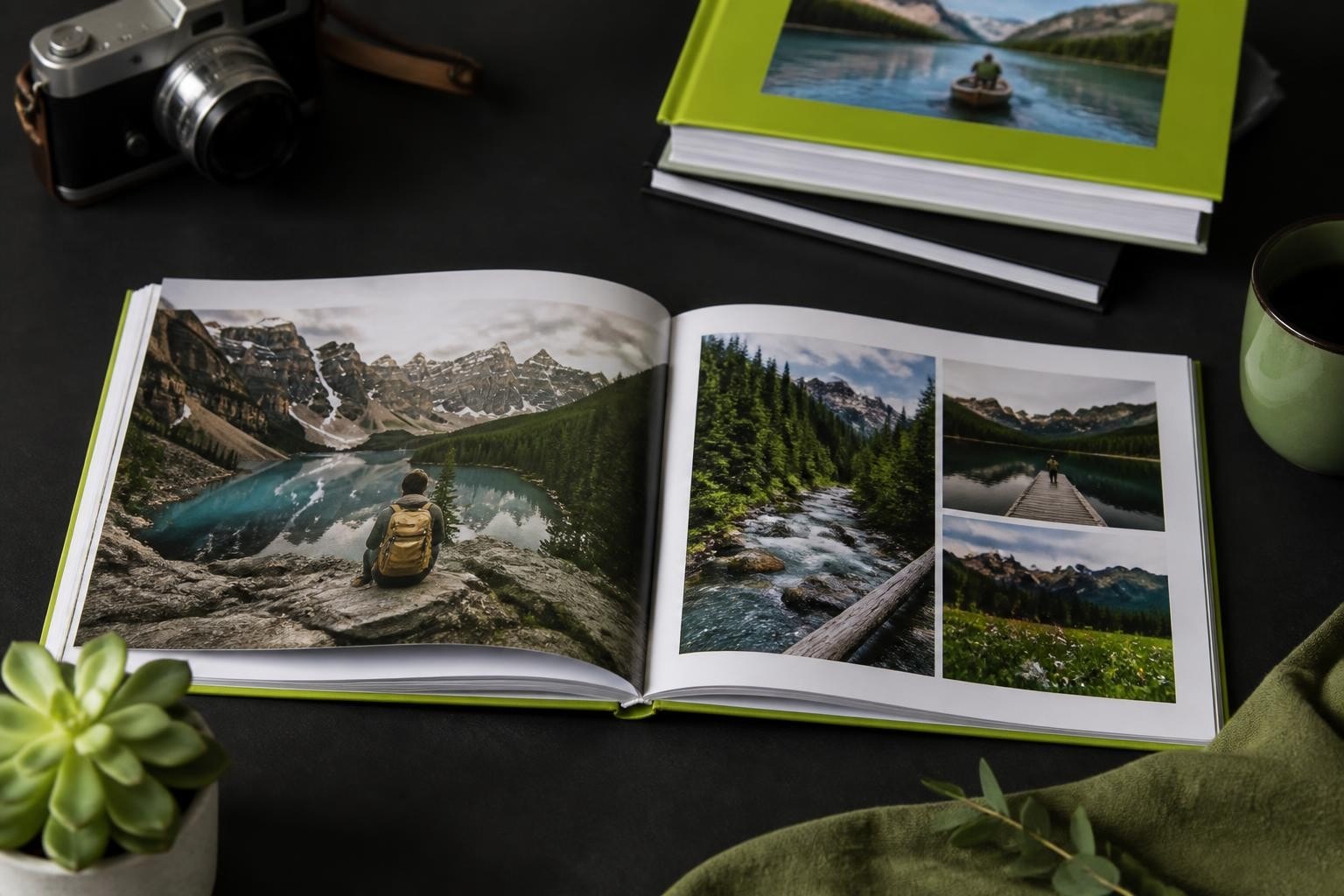
A travel picture book transforms fleeting holiday moments into tangible memories that last a lifetime. Unlike digital galleries stored on devices, a professionally designed photobook allows you to curate your favourite images, create narrative flow, and share your adventures in a format that friends and family can enjoy together. Whether you're documenting a weekend city break or a year-long journey across continents, the right approach to designing your travel picture book ensures your stories remain vivid for decades to come.
Understanding the Value of Travel Picture Books
The digital age has made photography more accessible than ever, with travellers capturing thousands of images on every trip. However, these photos often remain buried in folders, rarely viewed after the initial social media posts. A travel picture book changes this dynamic entirely.
Physical photobooks offer distinct advantages over digital storage:
- Permanent preservation of memories in high-quality print
- Curated storytelling that highlights the most meaningful moments
- Shared experiences during family gatherings and social occasions
- Protection against data loss, device failures, or platform closures
- Tangible keepsakes that can be passed down through generations
The process of creating a travel picture book also provides therapeutic benefits. Reviewing your journey, selecting images, and crafting captions allows you to relive the experience whilst gaining fresh perspective on what made the trip memorable. This reflective process often reveals patterns, themes, and emotional connections you hadn't consciously recognised during the actual travel.
Modern Technology Meets Traditional Craftsmanship
Today's photo book software combines the accessibility of digital tools with the quality of professional printing. Advanced platforms enable businesses to offer customers sophisticated design capabilities without requiring graphic design expertise. These solutions provide templates, automated layout suggestions, and customisation options that empower users to create professional-grade results.

Planning Your Travel Picture Book Structure
Effective photobooks require thoughtful planning before you begin the design process. The most compelling travel picture books tell coherent stories rather than simply displaying random images in chronological sequence.
Defining Your Narrative Approach
Consider which storytelling method best suits your journey:
- Chronological progression works brilliantly for road trips, multi-city tours, or adventures where the sequence of events matters
- Thematic organization groups images by categories such as food, architecture, people, or landscapes
- Geographical arrangement dedicates sections to different destinations or regions
- Emotional journey structures the book around feelings and experiences rather than logistics
Each approach creates different reading experiences. A chronological travel picture book might begin with departure excitement, progress through various destinations, and conclude with homecoming reflections. Conversely, a thematic photobook could feature separate chapters for "Local Cuisine," "Architectural Wonders," and "Cultural Encounters," regardless of when or where these moments occurred.
| Narrative Style | Best For | Potential Challenges |
|---|---|---|
| Chronological | Road trips, cruises, itinerary-based travel | Can feel repetitive if every day was similar |
| Thematic | Diverse experiences, photography-focused trips | May lose sense of journey progression |
| Geographical | Multi-destination tours | Requires careful balancing of page allocation |
| Emotional | Personal growth journeys, transformative travel | Needs strong writing to connect images |
Selecting and Editing Your Image Collection
Most travellers return with hundreds or thousands of photos, yet a travel picture book typically accommodates between 50 and 200 images depending on size and layout preferences. This necessitates rigorous editing.
Begin by rating your images using a simple three-tier system: essential (must include), strong candidates (maybe include), and archive (exclude from this project). Essential images might include iconic landmarks, once-in-a-lifetime moments, or photos with strong emotional resonance. Strong candidates are technically excellent or interesting photos that support your narrative without being critical to it.
Quality consistently outweighs quantity in photobook design. A single stunning image given generous space creates more impact than three mediocre photos crammed onto the same page. Consider how professional photographers approach storytelling through careful selection and sequencing.
Design Principles for Travel Picture Books
Visual design determines whether your travel picture book feels professional and engaging or cluttered and amateurish. Understanding fundamental design principles helps you make informed decisions throughout the creation process.
Layout Composition and Balance
Each spread (two facing pages) should function as a cohesive visual unit. Consider how images relate across the binding, using size, colour, and positioning to create rhythm and visual interest.
Effective layout strategies include:
- Full-bleed images that extend to page edges for dramatic impact
- White space that allows images to breathe and prevents visual overwhelm
- Grid systems that create order whilst allowing creative flexibility
- Alternating layouts that vary between image-heavy and text-focused spreads
Avoid placing similar images adjacent to each other unless deliberately creating a comparison or pattern. Instead, vary your compositions-follow a wide landscape shot with a close-up portrait, or contrast a busy market scene with a minimalist architectural detail.
Typography and Text Integration
Whilst images dominate travel picture books, thoughtful text enhances storytelling without overwhelming the visual experience. Captions provide context, dates, and anecdotes that help readers understand what they're viewing.
Keep text concise and purposeful. Rather than describing what's obvious in the image ("The Eiffel Tower in Paris"), share information that adds value: "We climbed 674 steps to the second level just before sunset, arriving as the city lights began twinkling below." This approach transforms simple documentation into narrative storytelling.
Select fonts that complement your travel picture book's aesthetic. Sans-serif typefaces project modernity and cleanliness, whilst serif fonts convey traditional elegance. Maintain consistency throughout, using maximum two typeface families-one for headings and another for body text.

Technical Considerations for Print Quality
The technical specifications you choose significantly impact your finished travel picture book's appearance and durability. Understanding these options helps you make informed decisions aligned with your budget and quality expectations.
Paper Stock and Binding Options
Paper weight, finish, and binding method affect both aesthetics and longevity:
- Lustre or satin finish balances colour vibrancy with reduced glare
- Matte finish provides subtle elegance and excellent text readability
- Glossy finish maximizes colour saturation and visual impact
- Layflat binding allows images to span across spreads without interruption
- Perfect binding offers traditional book appearance at accessible price points
- Hardcover options provide superior protection for frequently handled books
For travel picture books intended as coffee table displays or heirloom pieces, investing in premium paper stock and hardcover binding ensures your memories withstand repeated viewing. Conversely, softcover options with standard paper serve perfectly well for duplicate copies shared with friends or family members.
Image Resolution and Colour Management
Print requires significantly higher resolution than screen display. Images should be at least 300 DPI (dots per inch) at their final printed size. Photos taken on modern smartphones and digital cameras typically exceed this requirement, but heavily cropped or digitally zoomed images may appear pixelated when printed large.
Colour reproduction differs between screens and print. Monitors use RGB (red, green, blue) colour while printers use CMYK (cyan, magenta, yellow, black). Advanced photo book software handles these conversions automatically, but understanding this distinction helps manage expectations. Bright, saturated colours may appear slightly muted in print, whilst certain hues shift subtly during conversion.
Storytelling Techniques for Maximum Impact
A travel picture book succeeds not merely through beautiful images but through compelling storytelling that transports readers into your experiences. Strategic narrative techniques elevate your photobook from simple documentation to engaging visual literature.
Creating Emotional Arcs
Even non-fiction photobooks benefit from narrative structure. Consider opening with images that establish anticipation-airports, packed luggage, or departure gates. Build through the adventure's peak experiences, and conclude with reflective images that provide closure.
This emotional progression doesn't require dramatic events. A weekend city break can follow the same arc: arrival excitement, discovery and exploration, unexpected encounters, and satisfied contentment. The practical tips for photobook creation emphasize this storytelling approach across various travel contexts.
Incorporating Cultural Context
Travel picture books become richer when they provide cultural insights beyond surface-level tourism. Include images that reveal local daily life, traditional practices, or cultural nuances you encountered. Pair these with brief explanations that educate readers whilst demonstrating your engagement with the destination.
For instance, rather than simply photographing a temple, include images of worshippers, ritual objects, or architectural details alongside text explaining what you learned about local religious practices. This approach transforms your travel picture book into an educational resource that celebrates cultural diversity.
Advanced Customisation and Special Features
Modern photobook technology enables sophisticated customisation that personalizes your travel memories in ways impossible with traditional albums. Understanding these capabilities helps you create truly unique products.
Interactive Elements and Augmented Features
Some platforms now support QR codes that link to video content, music playlists, or additional photo galleries. Imagine a spread featuring mountain hiking photos with an embedded QR code linking to a brief video clip of the summit view. These hybrid approaches bridge physical and digital media whilst maintaining the tangible benefits of printed photobooks.
Maps, tickets, restaurant receipts, and other memorabilia can be photographed and incorporated as design elements. These authentic touches add texture and authenticity, transforming your travel picture book into a comprehensive documentation of your journey.
Personalised Design Templates
Advanced software solutions enable businesses to offer customers fully customizable templates that adapt to specific needs. Rather than forcing images into predetermined layouts, flexible systems adjust dynamically based on the number of photos, aspect ratios, and user preferences.
The technology behind platforms like Taopix allows businesses to provide sophisticated design tools whilst maintaining user-friendly interfaces. This balance ensures customers without design expertise can still produce professional-quality results that reflect their unique vision.
| Feature | Standard Options | Premium Possibilities |
|---|---|---|
| Cover customization | Photo selection, title text | Embossed text, custom illustrations, textured materials |
| Layout flexibility | Pre-set templates | Fully customizable positioning and sizing |
| Text integration | Basic captions | Multiple text boxes, varied fonts, decorative elements |
| Special pages | Standard photo pages | Fold-outs, pockets, transparent overlays |
Seasonal and Thematic Travel Collections
Whilst single-trip photobooks remain popular, many travellers now create series of books organized thematically or seasonally. This approach offers distinct advantages for frequent travellers or those documenting extended journeys.
Building Coherent Collections
Creating multiple volumes with consistent design elements-similar colour schemes, typography, or layout approaches-produces a cohesive collection that looks striking displayed together. Consider developing a signature style that carries across all your travel picture books, making them instantly recognizable as part of your personal series.
Annual travel compilations work particularly well for digital nomads, frequent business travellers, or adventure enthusiasts. Each volume chronicles a year's worth of journeys, creating a growing library that documents your evolving relationship with travel and exploration.
Thematic Focus Books
Rather than attempting comprehensive documentation, thematic photobooks explore specific subjects across multiple destinations. Food-focused travel picture books might feature culinary experiences from various countries, whilst architecture enthusiasts could compile images of religious buildings, modernist structures, or vernacular housing styles encountered worldwide.
This specialized approach appeals to readers with similar interests and creates conversation starters. A photobook dedicated to "Street Art Across Europe" or "Traditional Markets of Southeast Asia" demonstrates expertise whilst telling focused, compelling stories.

Collaborative and Gift Photobooks
Travel picture books serve purposes beyond personal documentation. Collaborative projects and gift photobooks require different approaches whilst maintaining high quality and thoughtful design.
Group Travel Documentation
When multiple travellers contribute images from shared journeys, coordination ensures balanced representation and cohesive storytelling. Establish guidelines regarding image selection, captioning responsibilities, and design preferences before beginning. Cloud-based software solutions enable collaborative editing, allowing team members to contribute regardless of geographical location.
Group travel picture books work brilliantly for family reunions, milestone celebrations, or friend group adventures. They become treasured keepsakes that multiple households can enjoy, with each participant receiving their own copy.
Creating Meaningful Gifts
A thoughtfully designed travel picture book makes an exceptional gift for travel companions, hosts who welcomed you during your journey, or family members curious about your adventures. Tailor these gift versions to the recipient's perspective-a photobook gifted to a host might emphasize your experiences in their city or country, including photos of shared meals or activities alongside grateful captions.
For couples celebrating anniversaries or special occasions, travel picture books documenting honeymoons or significant trips together become romantic keepsakes. The physicality of a beautifully bound book carries emotional weight that digital galleries cannot replicate.
Preserving Adventure Experiences
Beyond standard vacation photography, adventure travel presents unique challenges and opportunities for photobook creation. Action sports, remote destinations, and challenging conditions require adapted approaches whilst offering visually spectacular results.
Documenting Active Adventures
Adventure travel often generates dramatic imagery-mountain summits, underwater photography, extreme sports action shots. These images demand layout approaches that emphasize their energy and scale. Full-bleed spreads, dramatic cropping, and generous white space allow these powerful images maximum impact.
Balance high-energy action shots with quieter moments-camp scenes, preparation rituals, or contemplative landscapes. This rhythm prevents visual exhaustion whilst providing narrative depth that pure action sequences lack.
When booking adventure experiences through platforms like Innobook, capturing both the activities themselves and the surrounding context creates richer documentation. Include images of equipment, fellow participants, guides, and environments alongside action photography.
Remote and Exotic Destinations
Travel to unusual or remote locations yields unique imagery that deserves special treatment in your travel picture book. These journeys often involve considerable investment and planning, making high-quality documentation particularly valuable.
Consider including contextual information that helps readers appreciate the destination's remoteness or cultural distinctiveness. Maps showing your route, brief historical or geographical notes, or explanations of local customs enhance understanding and engagement.
For those enjoying luxury travel experiences-perhaps staying in exclusive accommodations like Aquamarine Villa in Bali or taking extraordinary journeys with services such as HELIGOLF-your travel picture book should reflect both the experiences themselves and the emotions they evoked. Premium printing quality and sophisticated design match the calibre of these exceptional adventures.
Business Applications for Travel Picture Books
Whilst personal travel documentation represents the primary market, travel picture books offer significant opportunities for businesses across various industries. Understanding these applications helps service providers develop appropriate offerings.
Professional Travel Photography
Professional travel photographers often create limited-edition photobooks as portfolio pieces, exhibition catalogues, or commercial products. These require exceptional print quality, sophisticated design, and durable construction that reflects professional standards.
The same technology platforms that serve consumer markets can be adapted for professional requirements. Businesses using robust photobook software solutions can serve both casual consumers and professional photographers through different product tiers and customization levels.
Tourism and Hospitality Industries
Hotels, resorts, tour operators, and destination marketing organizations increasingly use photobooks as marketing materials or guest keepsakes. A luxury resort might provide guests with complimentary photobooks featuring images captured during their stay, creating memorable touchpoints that encourage repeat visits and referrals.
Tour companies can offer photobook creation as value-added services, providing clients with professionally designed books documenting their guided adventures. This transforms the tour experience into a lasting product that generates ongoing brand exposure every time recipients share their photobooks with friends and family.
Maximizing Your Investment
Creating travel picture books requires investment in both time and resources. Strategic approaches ensure you maximize value whilst avoiding common pitfalls that diminish results.
Budgeting for Quality
Cost factors to consider include:
- Paper quality and weight (heavier paper costs more but feels premium)
- Binding method (layflat and hardcover increase price)
- Page count (more pages equal higher costs)
- Cover customization options
- Quantity discounts for multiple copies
- Shipping and handling
Rather than compromising across all elements, prioritize features most important to your specific project. A smaller page count with premium paper might deliver better results than numerous pages on standard stock. Similarly, investing in professional binding for your primary copy whilst ordering softcover duplicates for sharing balances quality with affordability.
Timing and Production Cycles
Production timelines vary significantly based on customization levels, printing methods, and shipping distances. Standard photobooks typically require one to two weeks from order to delivery, whilst premium options with custom features might need three to four weeks.
Plan accordingly if creating travel picture books as gifts for specific occasions. Ordering several weeks in advance prevents rushed decisions and allows time for reprints if initial results don't meet expectations. Many providers offer digital proofs before final printing, enabling adjustments without financial penalty.
Future Trends in Travel Documentation
The travel picture book industry continues evolving as technology advances and consumer preferences shift. Understanding emerging trends helps you create photobooks that remain current and engaging.
Sustainability and Eco-Conscious Production
Environmental awareness increasingly influences purchasing decisions. Consumers now seek photobooks printed on recycled paper using eco-friendly inks and sustainable production methods. Businesses adopting these practices appeal to environmentally conscious travellers whilst reducing their ecological footprint.
Digital-first workflows minimize waste by enabling precise proofing before physical production begins. This approach reduces rejected prints and excess inventory whilst maintaining quality standards.
Integration with Social Media and Digital Platforms
Modern travellers often document journeys across multiple platforms-Instagram, travel blogs, video channels, and photo-sharing services. Photobook creation tools increasingly integrate with these platforms, enabling direct import of images and captions from social accounts.
This integration streamlines the creation process significantly. Rather than manually downloading and organizing hundreds of photos, users can authenticate with their social media accounts and pull images directly into photobook design interfaces. Automated chronological sorting and caption import further reduce manual effort.
The challenge lies in curating effectively from these extensive digital libraries. Social media encourages frequent posting, often resulting in thousands of images from extended trips. Successful travel picture books require rigorous editing that social media integration alone cannot provide-human judgment remains essential for selecting images that tell coherent stories.
Creating a travel picture book transforms your collected images into curated stories that preserve adventures for years to come. By combining thoughtful planning, strong design principles, and quality production values, you ensure your travel memories receive the presentation they deserve. Taopix provides the software solutions that enable businesses to offer customers sophisticated photobook creation tools with flexible workflows and fully customizable experiences, empowering both casual travellers and professional photographers to bring their visual stories to life.